Guest Speaker → The best Moscow Film Festival ever, the 32nd

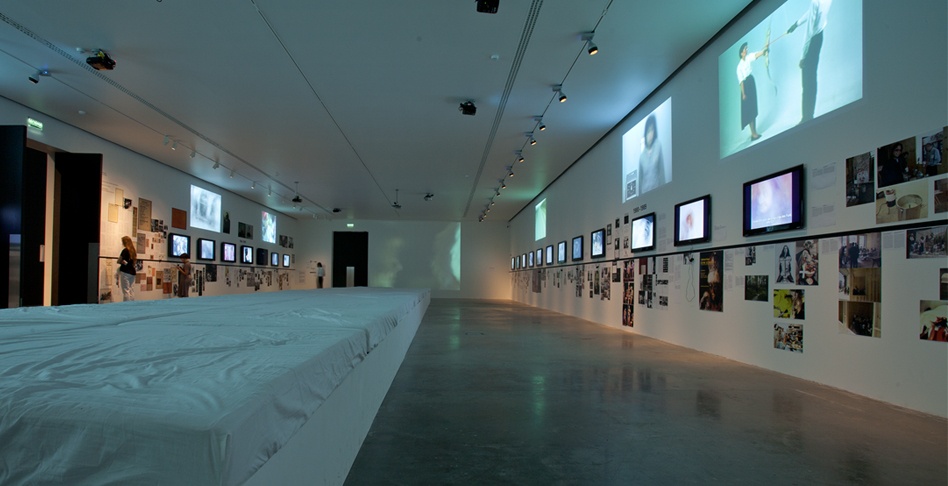
Excellent news about the film “Meyerhold Theatre and the Russian Avant-garde”. The film has been selected as part of the “100 years of performance” in Moscow along with films by Yoko Ono and other film makers, which is being held at the Garage in Moscow. The exhibition is a 100 year history of theatre using film and video installations.The Garage is a new venue for modern art in Moscow. It is a converted bus garage which was designed by the grat Russian avant-garde architect and artist Konstantin Melnikov. The exhibition will run from June until September 2010. We filmed there some years ago for the film Architecture and the Russian Avant-garde. At that time it was still a working garage so it was interesting to see how they have converted the building for use as an art gallery. The model it seems to me is the Tate Modern in London but on a smaller scale. There are two other main exhibitions; Mark Rothko which has an excellent range of Rothko’s work and also The Feast of Trimalchio by AES+F also a film/video 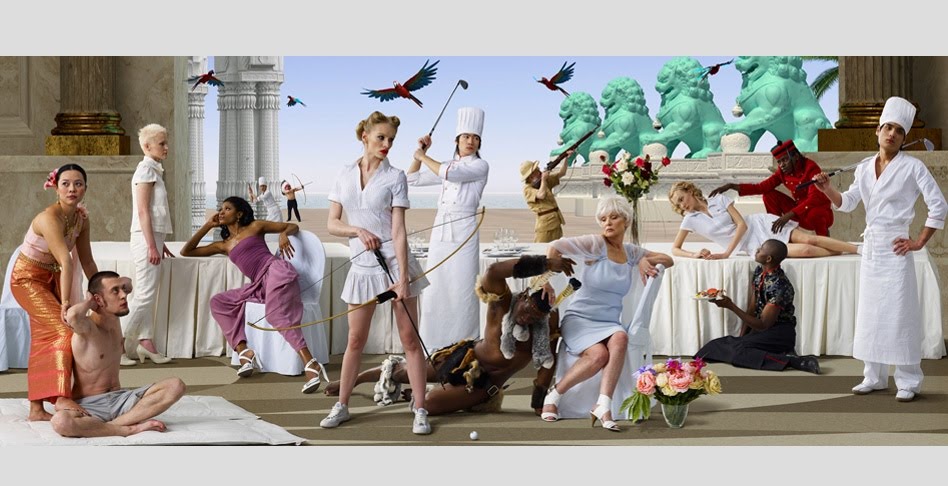 installation on a grand scale. The exhibition was first featured in New York last year where “Meyerhold Theatre and the Russian Avant-garde” was shown. Gratifying to see it in my (now) home town of Moscow where I can get to see it myself. have a look at the excert below.
On Monday in Moscow Copernicus Films managed to complete an important interview for the up and coming documentary film about Stanislavsky‘s life and work in theatre. Anatoly Smeliansky, the rector of the Moscow Arts Theatre School, kindly agreed to be interviewed and give his thoughts for a documentary film about the Russian theatre director Stansilavsky which will be released later in 2010. The film is in the final stages of pre production. Next week we will travel to the UK in order to record the voice over and a further interview with an eminent figure and writer on Stansilavsky in the English language. The film is being made with the cooperation of the Rose Bruford college of acting and the Stanislavsky Centre which is one of the largest archives of Stansilavsky outside of Russia. The Stansilavsky centre has made the archive available to Copernicus Films for use in the film.
If you wish to be kept up to date with the progress of this project subscribe below to the mailing list and receive a 30% discounted copy of the film “Meyerhold Theatre and the Russian Avant-garde” plus updates and other free downloads to be announced.
join our mailing list
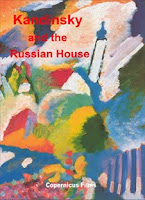
Kandinsky, a full-scale retrospective of the visionary artist, theorist, pioneer of abstract art, and seminal figure in the history of the Guggenheim Museum will be presented from September 18, 2009, to January 13, 2010. This exhibition is organized by the Solomon R. Guggenheim Foundation, New York, in cooperation with the Städtische Galerie im Lenbachhaus und Kunstbau, Munich, and the Centre Pompidou, Paris. The film “Kandinsky and the Russian House” was released in 2007 and has featured as part of the Kandinsky exhibitions in Germany and at the Pompidou Centre in Paris. It gives me great pleasure that the film will be associated with the 50th anniversary of the Guggenheim especially as Kandinsky served as an inspiration for the foundation of this great museum. This retrospective will bring together more than 100 paintings drawn primarily from these three institutions, whose collections make up the three largest repositories of Kandinsky in the world, as well as from significant private and public collections. A DVD of “Kandinsky and the Russian House” will be on sale at the exhibition and can be purchased at the Guggenheim shop in New York
When I was in Germany filming “Kandinsky and the Russian House” I was invited by a director friend, Peter Goedel who lived in Munich, to the film festival which was going at the time of filming. I had met Peter at another film festival in Toronto a year or so earlier and this meeting was one reason why I decided to go ahead and make a film about Kandinsky. Peter’s superb film “Tangier -Legend of a City” won three awards at Toronto and it was he who invited me to Munich when he heard that I was thinking of making a film about Kandinsky.
When I mentioned Kandinsky at the Munich Film Festival, people often talked about him as if he was a quasi European painter in the Matisse or impressionist mould and didn’t seem enthusiastic about acknowledging that Kandinsky was Russian at all. However if you look at Kandinsky’s work, the light that he found even in Southern Bavaria is very similar to a Russian light, the light of the Steppe. This is true I believe of even the most abstract of his paintings. Even as I look out of my window on a bright sunny Moscow morning I see Kandinsky’s colours and light everywhere. Anybody who has spent a long period of time in Russia will, in my opinion recognise this. The Argentinian and Irish artist Carmen Casey, who lived in Moscow for more than six years, commented to me that one of the difficulties she found about working in Moscow when she first arrived, was the sheer intensity of the light (on a sunny day of course) which she wasn’t used to and had never encountered befere. When I tried to explain this to people they would look at me blankly while I rambled on about my theories, especially the one that Kandinsky is the quintessential Russian painter. As he himself said, “Moscow is the tuning fork for all my painting”. And that is despite the fact that Kandinsky spent many years in all the European centres of artistic excellence of that time; Munich, Paris and finally Berlin at the Bauhaus. He always, I believe, returned artistically to his Russian roots . Why did he leave Russia it might be asked. In some ways it doesn’t make sense to ask such a question. Every artist must continuously expand their horizons and seek inspiration by travelling and through studying other cultures. Kandinsky came from a section of Russian society who would have been familiar with all the philosophical and cultural trends of Europe as well as Russia and would have been drawn to Europe as a result. However, the fact that Kandinsky no longer painted in Russia and had moved to Europe made him no more a European painter and no less a Russian painter.
Where ever artists find themselves they always see the world with their own eyes and interpret what they see from their own inner understanding.
An other factor here is the eastern influence in European painting which at that time was not such a strange thing as one might imagine. The collector of Central Asian Ikats or multi coloured robes,Tair Tairov, believes that the abstract patterns of these textiles and robes inspired a generation of artists in Europe. Picasso, Mattisse, Whistler and many others were all influnced one way or another by eastern art in particular Japanese art. It could be said that eastern art with its emphasis on the abstract was a componatnt part of the rise of abstract art in Europe and America. Kandinsky apparantely himself remarks how these multi-coloured robes infleunced his artistic development.
The film “Kandinsky and the Russian House” was released in 2007 and is part of a series of 6 films about the Russian Avant-garde.

These two films will be a completely new departure for Copernicus Films after recently completing the series “The Russian Avant-garde – Revolution or Renaissance”
However its fair to say that the two planned films are an offshot of the experience of the film David Burliuk and the Japanese Avant-garde
We have now returned to Tokyo after a week in Kyoto. Plenty of new material already which will work well in both films, although this is really only the start. I was particularly pleased with the Heian Shrine material of which I really didn’t have enough of. Taking a breather for a day while we settle into Tokyo. Apartment is quite good and we feel pretty comfortable with it – central and in the same area we lived in before so we know where everything is located. We will spend the next day or so relaxing, seeing friends and planning the next few weeks. Natasha has some things he needs to do as part of her own programme. We have a pretty good idea of what we want to do and what I want but it requires working out the finer details. Still trying to get into some kind of rhythm but that is just a question of time. Natasha as always giving full support and keeping a full photographic record of everything as well as getting on with her own business. This evening we will meet with Akira Suzuki who I interviewed for the David Burliuk film.
 The Tate Modern is to host an exhibition of the graphic work of Alexander Rodchenko and Lubova Popova – “Rodchenko and Popova: Defining Constructivism” opening on 12th February 2009.

In 2008 Bob Duggan reviewed the film “David Burliuk and the Japanese Avant-garde on artblogbybob. His comments about the section which referred to Gauguin in the film led to a reassessment of the way the whole series of documentary films called The Russian Avant-garde – Revolution or Renaissance. was constituted, of which “David Burliuk and the Japanese Avant-garde” is a part and was produced by Michael Craig and Copernicus Films in 2007. On his site, as well as commenting on the quality of the photography in the film, Duggan explained that he was especially interested in the part of the film about David Burliuk and his trip to Ogasawara, a small Japanese island in the Pacific ocean about a thousand kilometres south of Tokyo. David Burliuk admired and drew inspiration from Gauguin. In 1920, after several successful exhibitions in Japan, Burliuk traveled to the Ogasawara islands to recuperate after his gruelling journey through Siberia and paint in the manner of Gauguin who also traveled to the island of Tahiti in the early 1890s in order to develop what he believed would be a new art for a new era. Gauguin was himself also strongly influenced by Japanese art and this overlapping of interest in the film was of particular interest to Duggan.
When this section was included in the film, not only did it have implications for the structure of the film, in so far that Burliuk was interested in Gauguin and wanted to emulate Gauguin, it also had implications for the entire series. Gauguin was a precursor of the Russian Avant-garde and strongly influenced this unique artistic event in the history of world art. In this sense the episode devoted to Gauguin did not simply draw together strands of the Burliuk film but also drew the strands of the entire series together, connecting the sometimes disparate and amorphous phenomena which is known as the Russian Avant-garde. The Russian avant-garde incorporates movements from neo-primitivism, rayonism,constructivism and lasted roughly through a period from the 1880s until the early 1930s. This section of the film about Burliuk, gave the series a prisim though which all the various themes of the series could be viewed even if the structure is somewhat imposed on the material. Self evidently any structure which is applied to the history of the Russian avant-garde is not a true reflection of its development but merely a method of organising material into a coherent and accessible form for digestion by the public or viewer. The most important thing while preparing such a film is to be aware of this framework as something which is imposed and try not allow it to dominate an understanding of the material. In this way the viewer can reach their own conclusions or can be stimulated to discover the subject further for themselves. An example of the problems which arise for instance is associated with the whole project of presenting artists as if they were individuals working in isolation of the world around them. I will try to explain this in more detail.
In the west we privilege the individual over and above the collective and this is a result of our liberal humanist tradition derived form Christian-Judaeo concepts of the individuals place and role in the world. The development and progress of western culture is presented as a parade of past individual geniuses who serve as pillars or supports upon which society rests and in the present a further group of lone geniuses which will propel it into the future. For many Russian avant-garde artists and writers this obsession (or what they considered an obsession) with individual genius was in their eyes an obstacle to artistic progress and a false assessment of the contribution by artists to the overall development of society. As Alexander Rodchenko commented in the 1920s that in the modern era, in the age of the machine and industrialisation …”there will never be a unique airplane or car” ..therefore …”we need artist workers, not geniuses”. This belief was further underlined by Osip Brik, the futurist thinker who announced in a clear attack on the notion of authorship and its connotations of genius, that if Pushkin had not written Eugene Onegin somebody else would have sooner or later. This brings me back to the documentary arts series: The Russian Avant-garde – Revolution or Renaissance. Nearly all the films where about individuals “Rodchenko and The Russian Avant-garde”, “Meyerhold, Theatre and the Russian Avant-garde”, “Kandinsky and the Russian House”, “Mayakovsky” and of course “David Burliuk and the Japanese Avant-garde”. Only one film in the series “Architecture and the Russian Avant-garde” has a more general thematic structure, however even in this film I concentrated on three main figures – Malevich, Tatlin and Constantine Melnikov. It was very difficult to wriggle out of such a thematic straight jacket but nonetheless in each film a concerted attempt was made to relate the individual accomplishments of each artist to the wider concerns of the period and not portray them as lone geniuses working in isolation of each other but part of an artistic movement which had deep roots in the social and political events of the early part of the 20th century. Artists like Gauguin, Kandinsky, Burliuk and Rodchenko were grappling with some of the same artistic problems of their age, albeit exploring different solutions depending on the context in which they found themselves. The film “David Burliuk and the Japanese Avant-garde”, with its reference to Gauguin’s influence on the work of the Russian avant-garde artists of the era, presented an opportunity to draw together many of the threads which constituted this artistic epoch without forcing a preordained framework on the series. Instead the viewer could make up their own mind as to how the phenomena of the Russian avant-garde developed and influenced art in Russia before and after the revolution.
A new modern art venue has been opened in Moscow in September 2008. It is called the Garage and is literally an old Bus garage which has been renovated and bought by the Russian billionaire, Abram Abramovich as prohect managed by his girlfriend Dasha Zhukova. However it is not simply an old garage for buses but one of the most outstanding industrial architectural projects of its day. The arage was designed in 1925 by Constantine Melnikov who was one of the most innovative architects of the post revolutionary period of the 1920s and 30s.
In 1999 The film “Architecture and the Russian Avant-garde” was shot in Moscow and is part of a series of six films by Copernicus Films about the Russian avant-garde of the 1920s an 30s. In the film I devote a large portion of time to this artist and architect along with Malevich and Tatlin whose artistic innovations and experiments contributed to the devlopment of Russian and Soviet architecture.
After I filmed the somewhat down at heel exterior of the building I could never of imagined that it would eventually be used as an art gallery in Moscow, especially for a gallery which will display wooks of art by artists who previously had to present their work through underground channels or abroad.
When I was filming it was still being used as a garage for the municipal transport system. I desperately wanted to film inside but was denied permission by the authorities. However the unique and innovative design was there for anyone to see. It is built in a series of parallegrams to maximise the use of space in combination with ensuring a high level of functionality. The growth of car and petrol driven transport required new and bold design answers to cope with the new technological phenomena. Melnikov designed several other garages in Moscow which still exist today and are still in use. Below are pictures of the Intourist Garage (below) with a sweeping circular window which houses a ramp leading to the various stories.
Other architectual projects include “Club Rusakova” (below) . Melnikov was against the use of flabby weak architectual design and prefered load bearing structures with a clear functional aspect but at the same time aesthetically coherent.
Melnikov also built his own house(below) in the centre of Moscow in order to demonstrate his design for circular homes. These buildings and many others also appear in the film by Michael Craig “Architecure and The Russian avant-garde”
For a review of the film “Architecture and the Russian Avant-garde” click here
This entry is a further sequel to my work with Akira Suzuki on the film “David Burliuk and the Japanese Avant-garde”. At the end of last year and the beginning of this year we spent three months in Japan researching material for a film. While we were there we spent a great deal of time with Akira Suzuki who we interviewed in the film “David Burliuk and the Japanese Avant-garde”. which is part of the series by Copernicus Films The Russian Avant-garde – Revolution or Renaissance. The reason being he lived only ten to fifteen minutes from where we had rented an apartment for the duration of our stay. One Sunday morning he invited us to an open air antiques market in the grounds of the Sinto, Tomioka-Hachmangu Temple. We bought several items which were of interest to me and my wife. Among the bric a brac were old paintings, statues, chinaware and assorted vases and antiques. A short while ago Akira Suzuki contacted me with some startling news. At the very same market he had acquired a genuine David Burliuk painting (see picture below)from the period of his two year stay in Japan. To find a new painting by Burliuk is a rare event in itself but for one to turn up at such a market, moreover the same market which we had visited with Akira Suzuki, was astonishing. As I have already written early Akira Suzuki is a specialist on the work of David Burliuk in Japan and I had invited him to be interviewed for the film “David Burliuk and the Japanese Avant” on my first trip to Japan.
Even though the painting is a bit damaged a good art restorer would be able to bring the painting back to something approachng its original condition. Its difficult to say what the location is but it is tempting to speculate that it is a scene from Ogasawara, an island in the pacific Ocean where Burliuk and Palmov stayed with their families in order to paint much in the manner of Guaguin who went to live on Tahiti to find new inspiration for his work. It certainly resembles the island but it could be Oshima which they also visited. Akira Suzuki is not sure himself. It would be good to find out one way or the other
 Copernicus Films
http://english.ruvr.ru/radio_broadcast/2249225/10595720/
On June 24th Michael Craig was interviewed,discussing the 32nd Moscow Film Festival on Radio Voice of Russia with Estelle Winters, as well as his own film, “Meyerhold Theatre and the Russian Avant-garde” which is being shown as part of the exhibition “100 Years of Performance” at the Garage gallery in Moscow.