Day and Night in Chekhov Country

The early evening and night in the Russian countryside is a unique phenomenon. Mute in its stillness but full of sound and movement as if the earth itself has come alive. Humming and buzzing with  life. A myriad of creatures, birds and insects live out their fate and the forest stirs with unseen movement. It is the time when the emotions become attuned to the world and it seems we hear the fullness of its shifting chords and languid phrases. It is the time which Chekhov often chose in his plays to reveal the heightened awareness of the characters, where they re experience life’s betrayals and traumas as the intensity of the night encloses around the already enclosed world of the dacha.
Anyway that’s enough lyricism for one blog – on with the work. I work all day now, writing and sifting through the material for the films. I work better in the open air and even better when it rains for some reason. The long days give ample opportunity for prolonged activity and for thinking through ideas. Step by step the plans are beginning to take shape, gradually gaining coherence as well substance. Early days still but good progress.
Work on "Ogasawara" book close to completion

Last few days quite subdued while taking stock and trying to develop ideas for new projects. A few days working on the last pieces of the book “Journey to Ogasawara” which is gradually taking shape and will be ready to be published as an e-book at first and then as a paperback as well. Am editing footage which was shot on Ogasawara as part of the film “David Burliuk and the Japanese Avant-garde” but which wasn’t included in the film itself. Quite a lot of material as it turns out. I am editing the farewell send off which is part of the island’s tradition, a mixture of Japanese and it would seem Polynesian traditions. I need to add a few graphics and pictures and the e-book will be ready for publication.
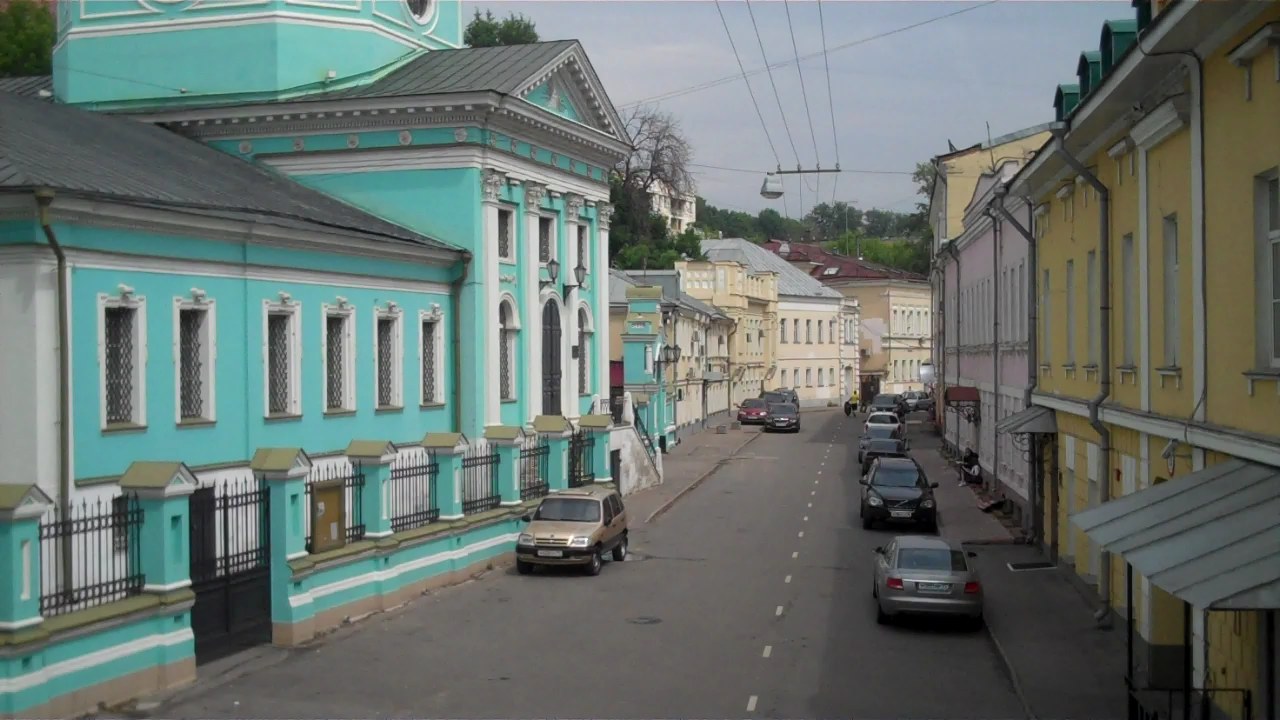
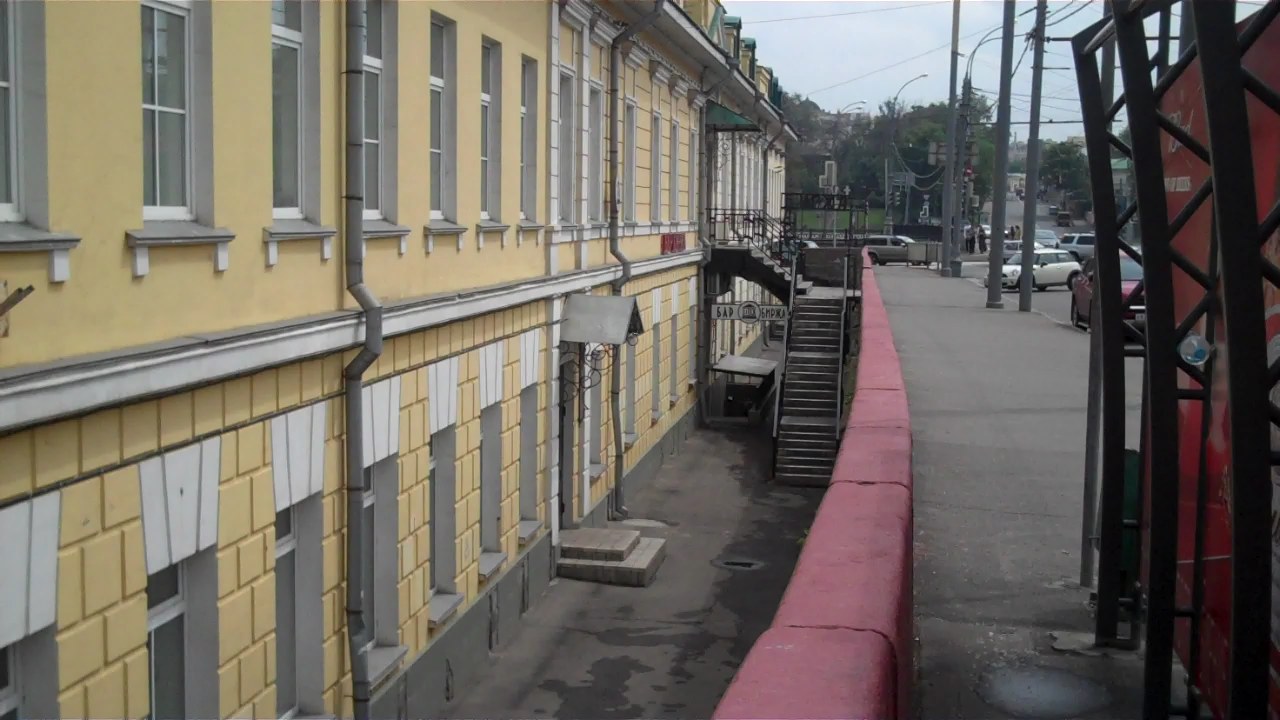
Summer in Moscow is a quiet affair with many people leaving at weekends for their dachas so that their is a sensation of Moscow being emptied which on the one hand is a pleasant alternative to the usual frenzied pace which is a character of the city. However it is an eerie sensation all the same. Did some filming on the flip camera around the location for film on which I worked some years ago across the road from the Library of Foreign Literature not far from Taganka. Walked back from there to Kitae Gorod and back home on the metro.

Return to Moscow

A long time has passed, or so it seems, since completing the film “Stanislavsky and the Russian Theatre” and a process of reflection has replaced the frenetic rush to finish the film in time for the premiere and get it released at roughly the same time. The premiere has been documented elsewhere and there is even a few clips which can be seen on YouTube. The film itself can be watched also on YouTube.

From the premiere of “Stanislavsky and the Russian Theatre”

What kind of character this reflection is taking will become apparent with time. Having relaxed in the UK for a few weeks, coming back to the energetic pace of Moscow is always disorientating but certain elements are beginning to take shape. One thing that becomes clear is how out of control the process is despite the fact that you think you are controlling all the elements and progress. Its only after getting my head out of the editing process that the true significance of the film can be seen. Its too early as yet  to make any confident conclusions or pronouncements. The most important thing for now is promoting the film. That is paramount at the moment and it requires a great deal of work and attention. In that sense many of the discussions which are taking place over the internet and elsewhere by such people as John Reiss , Ted Hope, Chris Jones and by independent film makers such as Oklahoma Ward and David Baker as well as many others are very apt. The divison between marketing your film and making a film in  the new environment for independent film makers, is a fine line, if it exists at all.

One thing that can be said in this process is the effect that Moscow has on my work. Moscow can be a difficult place to live and work in. The noise, the climate, the traffic and the general lifestyle all combine to create obstacles and barriers etc. However for me and I know I have said this before, there is a specific energy or atmosphere which exists here and maybe in Russia generally which is creatively stimulating and galvanising.

Tomorrow I will be off to the Moscow State Duma to a friends Photo exhibition which is opening there tomorrow. More about that later.

Moscow – Winter in monochrome

Moscow winters tend to become very monochrome in every sense of the word. When you stare out of the window everything looks like a black and white Japanese painting, all misty swirls and opaque brushstrokes. Today is one such day.  The steam pouring out from the tall chimneys of  electric power stations around Moscow adds a misty mystery to the atmosphere as the vapour drifts in copious clouds across the horizon. I’m not sure what long periods of such conditions do to the human psyche – perhaps I’m better off not knowing, especially after fifteen years as a resident.
To go out in -10 with a freezing wind blowing billowing snow off the north east or where ever, is not a pleasant prospect and most sane people avoid it. So what to do. No problem. Firstly I am writing this new blog. This I hope will be an occasional series of pieces or chronicles about a film makers life in Moscow and occasionally just the life of a simple human being who happens to live in Moscow.
Generally however the perspective will be from film making because that is what I do – make films in Russia and from time to time in other places as well – Japan for instance in 2009. As yet I am not sure exactly what shape this blog will take and how the content will develop but it is likely to have a more personal tone with simple and maybe even mundane reflections. However as the artist and photographer Alexander Rodchenko once wrote. “Our task in photography is to make the extraordinary appear mundane and the mundane appear extraordinary”.  Such a philosophy can unearth unexpected and rich deposits of knowledge and insight. So taking this as my starting point, off we go.

"Faces of Moscow" Photographic exhibition in Moscow

The snow is starting to melt as the days become warmer here in Moscow. All day the “alpenists” have been nosily clearing snow and ice from the roof of our apartment block. A long day with not a great deal to show for itself in many ways although our Japanese lesson always makes us feel good. Learning Japanese through Russian is a unique experience but I prefer it. It keeps my language skills sharp. At the moment working hard on the editing for“Stanislavsky and Russian Theatre”. Its gradually coming together and hopefully I will hit the end of February deadline.
Yesterday visited a friends exhibition of photographs at the House of Journalist in Moscow. Slava Sachkov exhibited together with the photo journalist Sergie Shevtzov a series of photographs reflecting Russian life and people. Slava has photographed the portraits of many of Russia’s most influential cultural figures including Solzhenitzyn. We have worked together on various occasions and I am glad to say he was the camera operator on two of the films in the series about the Russian avant-garde –  “Mayakovsky” and “Meyerhold Theatre and the Russian Avant-garde” Therefore its a real pleasure to see his work exhibited at this major exhibition in Moscow. 
Below is a selection from the exhibition.
Poster for exhibition “Faces of Russia”

1465026880

1800571200

St Petersburg Origins

In the early 1990s Russia changed its political system radically and the Soviet system of government was replaced in favour of a new political path with aspirations to democratize its institutions along western lines and economic models of capitalism. A lot has happened since that time. I mention it here as I was in Russia at that time for nearly four months, in St Petersburg in fact, working on a film for the BBC. My experience during that time  had a huge bearing on what I am doing at the moment which is making films and how I am doing it.

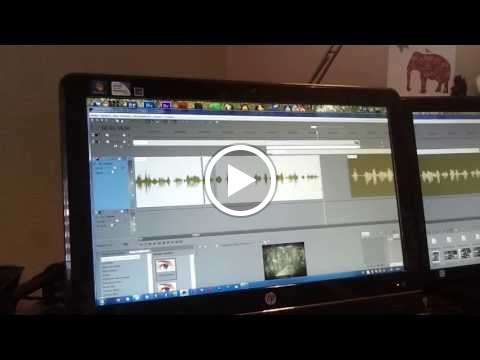
While in St Petersburg in 1993 I was introduced to an English guy called Adam Alexander or maybe Alexander Adams I cant quite remember.He had set up as a producer come distributor in the city. He had bought a largish apartment and I was invited around to meet him on one of my few days off during the production. Adam was a tall blond guy with a naive welcoming smile and manner, lively and generous with his personality and keen to get to know people. He showed me around the apartment and in one room he had a whole editing suite set up. A moviola was set up in one corner and abetacam editing suite set up in another part of the large room. I was fascinated by the whole operation in this romantic and phantasmagorical city. It had never occurred to me that you could set up an editing suite and production operation in an apartment. Now of course with computers and non linear editing everyone is doing it. However it was then that I decided I would live in Moscow and have a similar studio set up in an apartment at some time. It was a dream and I didn’t really believe it myself but one which some years later has come to be. As I sit here looking out across a wintry night in Moscow from my 7th floor apartment with a couple of computers making up a the backbone of an editing suite with extra screens for monitoring and so on.
After I lived in Moscow for some time and it came time to buy an apartment we looked for somewhere  in the centre and quite large so that it could double as a studio and a place to live. That way I felt it was a more economically workable investment. We knocked down a few walls during the renovation so that the apartment could double as a living space and a studio.For more complicated  technical operations there is a studio not 10 minutes away which I can use whenever I need to.

The Museum of the East in Moscow

The rain came to Moscow on Christmas day, melting the snow briefly before freezing into sheets of ice as smooth as glass on the streets and pavements. The trees turned into glass like sculptures as the water expanded into a transparent  coat of thick ice, covering the branches in a brittle quick-silvery casing.  Some trees have collapsed with the sheer weight of the ice. Many will struggle to recover when the ice melts having been denied oxygen for so long, unable to breath. No one remembers such a phenomena in Moscow and I certainly for all my years here cannot recall seeing such a thing, so beautiful and yet so damaging.
Natasha spent four days tending her exhibition of Ikebana at  the Moscow State Museum of the east in association with a Japanese artist who makes collage paintings with flower and plant material. I had to be there on hand as it were for emergencies and moral support.
The operator and director Slava Sachkov came to the exhibition with his wife Olga. A friend for many years in Moscow and camera operator on the film “Mayakovsky” and“Meyerhold Theatre and the Russian Avant-garde”, he had just returned from Vietnam for the ninth time. He is lecturing at a film school in Saigon and in seems to be single-handed helping to revive the Vietnamese film industry or so it seems to me. He stayed for a few hours and he talked about his work there and some of the visit he made to Hanoi. 
With time on my hands after Slava and Olga left, I wondered around the Museums labyrinth  halls. The collection is  is housed in the remains of a pre revolutionary classical building which had previously been the home of the Lunin family, whose most famous son Mikhail was a soldier, a poet and one of the leaders of the Decembrist movement. Its ornate pillared halls with 6 meter ceilings still retain their imperial grandeur of those far off days. I wandered alone most of the time through the muted interiors which house the different collections: The Iranian collection of paintings and cloths, swords and armour and costumes, the inheritance from another empire: the Chinese gallery with its scrolls and hundreds of sculpted  ornaments and figures made from ivory, jade and other rare stone material. Two galleries are devoted to Japanese art. In one hall there is a row of beautiful engravings on one side and   a series of calligraphy scrolls on the other wall. The centre piece in a huge glass case is a metre high ivory eagle in pose with wings outstretched as if to take flight.
As I walked by the mute exhibits, I tried to imagine if the pre revolutionary inhabitants ever imagined that their home would one day house a museum. The ghostly silence of each hall seemed to suggest they had not anticipated such a fate but were nonetheless content that the house was still standing and of benefit  to the thousands of visitors who pass through these halls to witness Russia’s intimate connection to the East.

St Petersburg Origins

In the early 1990s Russia changed its political system radically and the Soviet system of government was replaced in favour of a new political path with aspirations to democratize its institutions along western lines and economic models of capitalism. A lot has happened since that time. I mention it here as I was in Russia at that time for nearly four months, in St Petersburg in fact, working on a film for the BBC. My experience during that time  had a huge bearing on what I am doing at the moment which is making films and how I am doing it.

While in St Petersburg in 1993 I was introduced to Adam Alexander or maybe Alexander Adams I cant quite remember.He had set up as a producer come distributor in the city. He had bought a largish apartment and I was invited around to meet him on one of my few days off during the production. Adam was a tall and light haired with a naive welcoming smile and manner – lively and generous with his personality and keen to get to know people. He showed me around the apartment and in one room he had a whole editing suite set up. A moviola was set up in one corner and abetacam editing suite set up in another part of the large room. I was fascinated by the whole operation in this romantic and phantasmagorical city. It had never occurred to me that you could set up an editing suite and production operation in an apartment. Now of course with computers and non linear editing everyone is doing it. However it was then that I decided I would live in Moscow and have a similar studio set up in an apartment at some time. It was a dream and I didn’t really believe it myself but one which some years later has come to be. As I sit here looking out across a wintry night in Moscow from my 7th floor apartment with a couple of computers making up a the backbone of an editing suite with extra screens for monitoring and so on.After I lived in Moscow for some time and it came time to buy an apartment we looked for somewhere  in the centre and quite large so that it could double as a studio and a place to live. That way I felt it was a more economically workable investment. We knocked down a few walls during the renovation so that the apartment could double as a living space and a studio.For more complicated  technical operations there is a studio not 10 minutes away which I can use whenever I need to.

Thoughts from St Petersburg

Just returned from St Petersburg for 24 hours shooting an interview for a private client. Excellent footage. The last time I was in St Petersburg was 1993 on the film Grushko. We were there slightly longer (3-4 months) at that time. Now the whole atmosphere has changed. Much more lively and open although a lot less stressful than Moscow. Travelled up on the new high speed express railway. Fantastic experience, better than air travel. Everything went well just a shame couldn’t stay longer.

Revisiting St Petersburg after all this time and essentially returning as a film maker whereas before I was working on somebody else’s production, has given me food for thought. The question that is exercising me the most is marketing my films – those which are already complete and those which will be available over the coming months. For instance I am putting the finishing touches to “The Japanese Garden – Art, Landscape and Meaning”. A film, which as its title suggests, will explore the artistic and philosophical meaning of Japanese gardens. As  soon as this is ready I will be straight onto another project which is also in post production “Stanislavsky and the Metamorphosis of Russian Theatre. The problem I am finding is coordination of the marketing of this material across the Internet. It really is a full time activity in itself but an absolutely key component of film making and is becoming more so. I have a number of sites and blogs etc across social networks and need to draw them together into some kind of coherent strategy or at least align them along some strategy which I actually don’t have as yet.

One idea I have had for the release of “The Japanese Garden – Art, Landscape and Meaning” is to simultaneously publish an e-book in monthly instalments, recounting the 2 three month shoots in Japan which went into the making of the film. This I think will help promote the film, provide background information to the subject as well as adding an extra dimension to the whole project.

Moscow Streets – Prelude to a film series.

In order to understand what its like to film in Moscow or just be in Moscow, on the streets, squares and boulevards, one needs to get a feel of the atmosphere in Moscow in those early days of 1995. Its very different now, garishly neon lit cityscape’s which have displaced the dark dusty streets and yards which existed at that time. It was said that up to perestroika you could walk from one end of Moscow to another without having to cross a road. You simply moved form one courtyard to another. I would walk around Moscow for days on end sometimes as I had little else to do in that early time when I hardly knew anybody. The winter dust of early March blew around my cheeks and filled my nose with a fine stinging compound, thick in its icy consistency. The snow had all melted away but the cold air contained the eroded particles from a city that was busily fending off decay as best it could and as it still does, although now the resources are more adequate for building glass and stone monsters which are rising sheer into the Moscow skies. I walked back from a trip to the supermarket “Three Fat Men” with a miserable depressive gait, absorbing the sight of yellow and cracked masonry and dull chipped black railings of the low buildings which had been unable to endure the winter and seemed to sag under layer upon layer of winter silt left behind by the melted snow. The grey and heavy weather added to the muted atmosphere. No clouds overhead, simply a misty canopy, more like rising steam than clouds. But in all this was Moscow’s heavy beauty which could bear down on ones consciousness like a cruel mistress. However this benumbing beauty was only one facet of the whole edifice, and I can show you other facets. For the time being it was all I could see and feel and it left me with an aching wonder at the enormity of the grinding vision which was opening up before me seeming to surround me with a phantasmagorical landscape of sweet deterioration which I loved all the more for its air of decay and bleakness. This was not the dream of most of Moscow’s residents. They aspired to other visions of Moscow, lighter and gentler but at that time, wrapped in its post perestroika mantel, it was the reality for most of the inhabitants of Moscow and for me.