In order to understand what its like to film in Moscow or just be in Moscow, on the streets, squares and boulevards, one needs to get a feel of the atmosphere in Moscow in those early days of 1995. Its very different now, garishly neon lit cityscape’s which have displaced the dark dusty streets and yards which existed at that time. It was said that up to perestroika you could walk from one end of Moscow to another without having to cross a road. You simply moved form one courtyard to another. I would walk around Moscow for days on end sometimes as I had little else to do in that early time when I hardly knew anybody. The winter dust of early March blew around my cheeks and filled my nose with a fine stinging compound, thick in its icy consistency. The snow had all melted away but the cold air contained the eroded particles from a city that was busily fending off decay as best it could and as it still does, although now the resources are more adequate for building glass and stone monsters which are rising sheer into the Moscow skies. I walked back from a trip to the supermarket “Three Fat Men” with a miserable depressive gait, absorbing the sight of yellow and cracked masonry and dull chipped black railings of the low buildings which had been unable to endure the winter and seemed to sag under layer upon layer of winter silt left behind by the melted snow. The grey and heavy weather added to the muted atmosphere. No clouds overhead, simply a misty canopy, more like rising steam than clouds. But in all this was Moscow’s heavy beauty which could bear down on ones consciousness like a cruel mistress. However this benumbing beauty was only one facet of the whole edifice, and I can show you other facets. For the time being it was all I could see and feel and it left me with an aching wonder at the enormity of the grinding vision which was opening up before me seeming to surround me with a phantasmagorical landscape of sweet deterioration which I loved all the more for its air of decay and bleakness. This was not the dream of most of Moscow’s residents. They aspired to other visions of Moscow, lighter and gentler but at that time, wrapped in its post perestroika mantel, it was the reality for most of the inhabitants of Moscow and for me.
Uncategorized
Interview with Michael Craig guest speaker on Voice of Russia discussing the 32nd Moscow Film Festival

The Moscow Garage and Meyerhold Film -Reprise
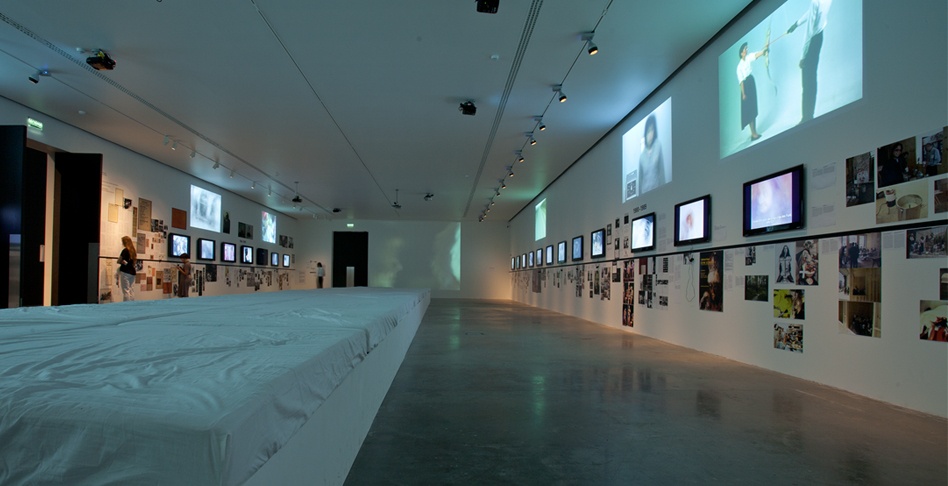
Excellent news about the film “Meyerhold Theatre and the Russian Avant-garde”. The film has been selected as part of the “100 years of performance” in Moscow along with films by Yoko Ono and other film makers, which is being held at the Garage in Moscow. The exhibition is a 100 year history of theatre using film and video installations.The Garage is a new venue for modern art in Moscow. It is a converted bus garage which was designed by the grat Russian avant-garde architect and artist Konstantin Melnikov. The exhibition will run from June until September 2010. We filmed there some years ago for the film Architecture and the Russian Avant-garde. At that time it was still a working garage so it was interesting to see how they have converted the building for use as an art gallery. The model it seems to me is the Tate Modern in London but on a smaller scale. There are two other main exhibitions; Mark Rothko which has an excellent range of Rothko’s work and also The Feast of Trimalchio by AES+F also a film/video 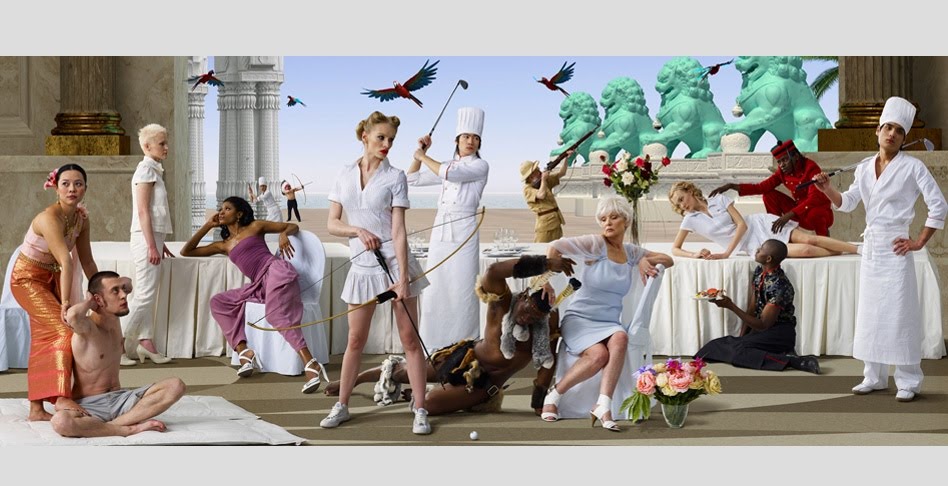 installation on a grand scale. The exhibition was first featured in New York last year where “Meyerhold Theatre and the Russian Avant-garde” was shown. Gratifying to see it in my (now) home town of Moscow where I can get to see it myself. have a look at the excert below.
Stanslavsky Documentary Film – Copernicus Films – Update
Just back from the UK after accomplishing several important steps in the progress of this new documentary film about Stanislavsky of his life and work. The one major accomplishment was securing the interview with Jean Benedetti, one of the foremost international authorities on Stanislavsky, which will be included as part of the film. After a period of negotiation the interview took place with Jean Benedetti at the beginning of May 2010. Instrumental to this process was the help of Paul Fryer of the Rose Bruford College of acting and Andrew Eglinton also from Rose Bruford College and who runs The London Theatre Blog. Paul Fryer is also curator of The Stanislavsky Centre which houses one of the largest Stanislavsky archives outside of Russia and is a major resource for research into Stanislavsky. Andrew made sure that the logistics side of things were in place as well as playing a main role in the recording sessions which took place at Rose Bruford College and advice about archive material. On returning to Moscow the production will continue with more filming and locations in Moscow as well as negotiations for archive footage. Post production and editing for the film is planned for the middle of June and will continue throughout the summer.
Stanislavsky Film
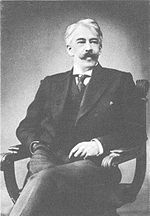
On Monday in Moscow Copernicus Films managed to complete an important interview for the up and coming documentary film about Stanislavsky‘s life and work in theatre. Anatoly Smeliansky, the rector of the Moscow Arts Theatre School, kindly agreed to be interviewed and give his thoughts for a documentary film about the Russian theatre director Stansilavsky which will be released later in 2010. The film is in the final stages of pre production. Next week we will travel to the UK in order to record the voice over and a further interview with an eminent figure and writer on Stansilavsky in the English language. The film is being made with the cooperation of the Rose Bruford college of acting and the Stanislavsky Centre which is one of the largest archives of Stansilavsky outside of Russia. The Stansilavsky centre has made the archive available to Copernicus Films for use in the film.
If you wish to be kept up to date with the progress of this project subscribe below to the mailing list and receive a 30% discounted copy of the film “Meyerhold Theatre and the Russian Avant-garde” plus updates and other free downloads to be announced.
join our mailing list
The Beginning of the Series "The Russian Avant-garde"
Where did the series about the Russian Avant-garde begin, is a question I am asked from time to time. I had been working as a consultant for a documentary film company in Russia advising them about foreign distribution for their films. It was during this time especially that I learnt about making films in Russia. I had worked on feature films in Russia before, for instance “Grushko” in St Petersburg, and two other films in Moscow, ending with “The Stringer” Participating in these projects gave me some rich experiences and significant insights into film making in Russia. The work with the documentary film company, however, gave me some real hands on experience of working in Russian studios and some good contacts which encouraged me to start making my own films. I wasn’t sure at first what to make films about, which subjects to tackle so to speak and then by chance I heard about an exhibition of the Costakis collection in Moscow. Costakis collected paintings and works of art from avant-garde artists of the 20s and 30s who largely left Russia and tried to eke out an existence in the various capitals of Europe. After the war Costakis travelled around Russia and Europe collecting these paintings, sometimes picking them up for 50 dollars or a bottle of wine or so legend would have it. In a word he singlehandedly rescued hundreds and hundreds of paintings to amass what became a priceless collection of avant-garde works which he donated to the Russian State.In the beginning Costakis collected the Masters of the Dutch School of Landscape Painters but modernist works by Picasso and Matisse soon fell within his field of vision. In 1946 he came across three paintings in a Moscow studio by Olga Rozanova . He described how, in the dark days after the war these brightly coloured paintings of the lost Avant-Garde: “were signals to me. I did not care what it was… but nobody knew what anything was in those days”.So struck by the powerful visual effect of the strong colour and bold geometric design which spoke directly to the senses, that he became determined to rediscover the Suprematist and Constructivist art which had been lost and forgotten in the attics, studios and basements of Moscow and Leningrad. He hunted for pictures which had been ‘lost’, some that were rolled up and covered with dust. He met Vladimir Tatlin and befriended Varvara Stepanova. He tracked down friends of Kasimir Malevich and bought works by Lubov Popova and Ivan Kliun. He particularly admired Anatoly Zverev, Russian expressionist whom he met in the 50’s. Costakis said about Zverev “it was a source of great happiness for me to come into contact with this wonderful artist, and I believe him to be one of the most talented artists in Soviet Russia.”
By the 1960 George Costakis’ apartment in Moscow had become a place for international art collectors and art lovers in general to meet and exchange ideas and opinions, as some called it, Russia’s unofficial Museum of Modern Art. The same year Costakis, with his family, left the Soviet Union and moved to Greece , but he agreed that he should leave 50 per cent of his collection in the State Tretyakov Gallery of Moscow. In 1997 the Greek State bought the 1275 works and they are now part of the permanent collection of the State Museum of Contemporary Art, in Thessaloniki, Greece.
It was this story which first inspired me to make a film. The passionate quest of Costakis, I believed, would make an excellent documentary film. I became even more convinced after I saw the exhibition of his collection in Moscow some time in 1998. It seemed to me that there was something unique and intriguing in the geomtrical and abstract colours and shapes. They seemed to have a dynamism and energy which I had not encountered anywhere else or in any other artistic tradition. However the logistics for the film failed to gain any traction. All the same I still continued to research the subject of the Russian Avant-garde and as part of these researches I came across Alexander Rodchenko, the painter and photographer. People often asked me why in particular Rodchenko became the first film I made. “Why Rodchenko?” they would say. There were two basic reasons which attracted me to the idea of making a film about Rodchenko. Firstly Rodchenko abandoned painting altogether to take up photography. Easel painting is dead he maintained, only the camera can reflect the social and visual realities which were emerging at that time. It was this idea of a painter almost violently going against his own art which I thought would make a good film. The second reason is that Rodchenko’s experiments in art and photography helps establish a working visual grammar for anybody undertaking a film especially if it is ones first serious film. “The visually coherent “look” which the film has was already present in Rodchenko photographs. His understanding of the compositional values in any image, such as volume, contrast, depth, balance, proportion etc is a perfect introduction to any film maker. One other point which is worth making is that Rodchenko saw Moscow not as a place to live and work but as a territory for study, that is a space exploring new visual and aesthetic frontiers. He would walk around Moscow photographing the new buildings and objects appearing on the streets, finding new angles and perspectives to illuminate the mundane and make the spectacular commonplace. As I followed in his footsteps, literally, I got an excellent “feel” for the material. Moscow no longer remained a bleak, cold and alien environment I had experienced when I first arrived but a city with immense visual and creative possibilities.
The Beginning of the Series "The Russian Avant-garde"
Where did the series about the Russian Avant-garde begin, is a question I am asked from time to time. I had been working as a consultant for a documentary film company in Russia advising them about foreign distribution for their films. It was during this time especially that I learnt about making films in Russia. I had worked on feature films in Russia before, for instance “Grushko” in St Petersburg, and two other films in Moscow, ending with “The Stringer” Participating in these projects gave me some rich experiences and significant insights into film making in Russia. The work with the documentary film company, however, gave me some real hands on experience of working in Russian studios and some good contacts which encouraged me to start making my own films. I wasn’t sure at first what to make films about, which subjects to tackle so to speak and then by chance I heard about an exhibition of the Costakis collection in Moscow. Costakis collected paintings and works of art from avant-garde artists of the 20s and 30s who largely left Russia and tried to eke out an existence in the various capitals of Europe. After the war Costakis travelled around Russia and Europe collecting these paintings, sometimes picking them up for 50 dollars or a bottle of wine or so legend would have it. In a word he singlehandedly rescued hundreds and hundreds of paintings to amass what became a priceless collection of avant-garde works which he donated to the Russian State.
In the beginning Costakis collected the Masters of the Dutch School of Landscape Painters but modernist works by Picasso and Matisse soon fell within his field of vision. In 1946 he came across three paintings in a Moscow studio by Olga Rozanova . He described how, in the dark days after the war these brightly coloured paintings of the lost Avant-Garde: “were signals to me. I did not care what it was… but nobody knew what anything was in those days”.So struck by the powerful visual effect of the strong colour and bold geometric design which spoke directly to the senses, that he became determined to rediscover the Suprematist and Constructivist art which had been lost and forgotten in the attics, studios and basements of Moscow and Leningrad. He hunted for pictures which had been ‘lost’, some that were rolled up and covered with dust. He met Vladimir Tatlin and befriended Varvara Stepanova. He tracked down friends of Kasimir Malevich and bought works by Lubov Popova and Ivan Kliun. He particularly admired Anatoly Zverev, Russian expressionist whom he met in the 50’s. Costakis said about Zverev “it was a source of great happiness for me to come into contact with this wonderful artist, and I believe him to be one of the most talented artists in Soviet Russia.”
By the 1960 George Costakis’ apartment in Moscow had become a place for international art collectors and art lovers in general to meet and exchange ideas and opinions, as some called it, Russia’s unofficial Museum of Modern Art. The same year Costakis, with his family, left the Soviet Union and moved to Greece , but he agreed that he should leave 50 per cent of his collection in the State Tretyakov Gallery of Moscow. In 1997 the Greek State bought the 1275 works and they are now part of the permanent collection of the State Museum of Contemporary Art, in Thessaloniki, Greece.
It was this story which first inspired me to make a film. The passionate quest of Costakis, I believed, would make an excellent documentary film. I became even more convinced after I saw the exhibition of his collection in Moscow some time in 1998. It seemed to me that there was something unique and intriguing in the geomtrical and abstract colours and shapes. They seemed to have a dynamism and energy which I had not encountered anywhere else or in any other artistic tradition. However the logistics for the film failed to gain any traction. All the same I still continued to research the subject of the Russian Avant-garde and as part of these researches I came across Alexander Rodchenko, the painter and photographer. People often asked me why in particular Rodchenko became the first film I made. “Why Rodchenko?” they would say. There were two basic reasons which attracted me to the idea of making a film about Rodchenko. Firstly Rodchenko abandoned painting altogether to take up photography. Easel painting is dead he maintained, only the camera can reflect the social and visual realities which were emerging at that time. It was this idea of a painter almost violently going against his own art which I thought would make a good film. The second reason is that Rodchenko’s experiments in art and photography helps establish a working visual grammar for anybody undertaking a film especially if it is ones first serious film. “The visually coherent “look” which the film has was already present in Rodchenko photographs. His understanding of the compositional values in any image, such as volume, contrast, depth, balance, proportion etc is a perfect introduction to any film maker. One other point which is worth making is that Rodchenko saw Moscow not as a place to live and work but as a territory for study, that is a space exploring new visual and aesthetic frontiers. He would walk around Moscow photographing the new buildings and objects appearing on the streets, finding new angles and perspectives to illuminate the mundane and make the spectacular commonplace. As I followed in his footsteps, literally, I got an excellent “feel” for the material. Moscow no longer remained a bleak, cold and alien environment I had experienced when I first arrived but a city with immense visual and creative possibilities.
Guggenheim on its 50th anniversary and Kandinsky Film
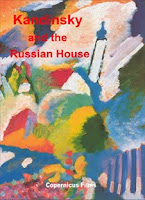
Kandinsky, a full-scale retrospective of the visionary artist, theorist, pioneer of abstract art, and seminal figure in the history of the Guggenheim Museum will be presented from September 18, 2009, to January 13, 2010. This exhibition is organized by the Solomon R. Guggenheim Foundation, New York, in cooperation with the Städtische Galerie im Lenbachhaus und Kunstbau, Munich, and the Centre Pompidou, Paris. The film “Kandinsky and the Russian House” was released in 2007 and has featured as part of the Kandinsky exhibitions in Germany and at the Pompidou Centre in Paris. It gives me great pleasure that the film will be associated with the 50th anniversary of the Guggenheim especially as Kandinsky served as an inspiration for the foundation of this great museum. This retrospective will bring together more than 100 paintings drawn primarily from these three institutions, whose collections make up the three largest repositories of Kandinsky in the world, as well as from significant private and public collections. A DVD of “Kandinsky and the Russian House” will be on sale at the exhibition and can be purchased at the Guggenheim shop in New York
When I was in Germany filming “Kandinsky and the Russian House” I was invited by a director friend, Peter Goedel who lived in Munich, to the film festival which was going at the time of filming. I had met Peter at another film festival in Toronto a year or so earlier and this meeting was one reason why I decided to go ahead and make a film about Kandinsky. Peter’s superb film “Tangier -Legend of a City” won three awards at Toronto and it was he who invited me to Munich when he heard that I was thinking of making a film about Kandinsky.
When I mentioned Kandinsky at the Munich Film Festival, people often talked about him as if he was a quasi European painter in the Matisse or impressionist mould and didn’t seem enthusiastic about acknowledging that Kandinsky was Russian at all. However if you look at Kandinsky’s work, the light that he found even in Southern Bavaria is very similar to a Russian light, the light of the Steppe. This is true I believe of even the most abstract of his paintings. Even as I look out of my window on a bright sunny Moscow morning I see Kandinsky’s colours and light everywhere. Anybody who has spent a long period of time in Russia will, in my opinion recognise this. The Argentinian and Irish artist Carmen Casey, who lived in Moscow for more than six years, commented to me that one of the difficulties she found about working in Moscow when she first arrived, was the sheer intensity of the light (on a sunny day of course) which she wasn’t used to and had never encountered befere. When I tried to explain this to people they would look at me blankly while I rambled on about my theories, especially the one that Kandinsky is the quintessential Russian painter. As he himself said, “Moscow is the tuning fork for all my painting”. And that is despite the fact that Kandinsky spent many years in all the European centres of artistic excellence of that time; Munich, Paris and finally Berlin at the Bauhaus. He always, I believe, returned artistically to his Russian roots . Why did he leave Russia it might be asked. In some ways it doesn’t make sense to ask such a question. Every artist must continuously expand their horizons and seek inspiration by travelling and through studying other cultures. Kandinsky came from a section of Russian society who would have been familiar with all the philosophical and cultural trends of Europe as well as Russia and would have been drawn to Europe as a result. However, the fact that Kandinsky no longer painted in Russia and had moved to Europe made him no more a European painter and no less a Russian painter.
Where ever artists find themselves they always see the world with their own eyes and interpret what they see from their own inner understanding.
An other factor here is the eastern influence in European painting which at that time was not such a strange thing as one might imagine. The collector of Central Asian Ikats or multi coloured robes,Tair Tairov, believes that the abstract patterns of these textiles and robes inspired a generation of artists in Europe. Picasso, Mattisse, Whistler and many others were all influnced one way or another by eastern art in particular Japanese art. It could be said that eastern art with its emphasis on the abstract was a componatnt part of the rise of abstract art in Europe and America. Kandinsky apparantely himself remarks how these multi-coloured robes infleunced his artistic development.
The film “Kandinsky and the Russian House” was released in 2007 and is part of a series of 6 films about the Russian Avant-garde.
What's been happening back in Moscow
Already a month since we have returned from Japan. The backlog of business was formidable even though I tried to deal with a much as I could while we were on the road in Japan. Reasonably successful dealing with most things but all the same the sheer volume of tasks was overwhelming once we arrived back in Moscow. I had made a conscious decision to try and hit the ground running and get straight back into editing as soon as possible and that more or less worked out. Just getting back into the rhythm of Moscow life is a task in itself but then I have plenty of experience.
Its time to really take stock of what was the outcome of the whole Japan trip. The first thing to say is that we achieved at least 95% of the goals we set our selves plus an extra 20% of other goals which were fulfilled through the chances and opportunities thrown up by simply being in Japan for such an extended period. Ultimately these things aren’t quantifiable in any meaningful sense but it gives some idea of scale. For instance after visiting Oshima with Akira Suzuki and meeting the curator of the Island Museum in memory of Gomo Kimuro we decided to interview both of them and the connections they have with the Island and its culture.I hadn’t really intended this, I really just wanted to look at the Island and film a bit especially as David Burliuk spent time there painting with his family. It unclear how to use this material but there are various possibilities which are worth pursuing.
As for the main task in hand, that is the two films about Japanese art which are in progress (One traditional one contemporary), the material which we have shot and coupled with the extensive research we were able to complete in Japan have broadened and given depth to a project which was already at a well developed stage. The situation as it stands now is that I have to extend the post production stage for a much longer period than I expected but in the long run it will be of over all benefit to the project.
At the moment its too early to reveal the substance of the films in question simply to say that they will concentrate on Japanese art seen from an unusual perspective and contemporary art in Japan. The films will be linked thematically so that from time to time there will be a seamless crossover from one film to the other but at the same time the two films will stand alone as separate entities and can be viewed as such. Editing is progressing at a slow but steady pace and unfortunately you can’t rush these things, its laborious,time consuming but rewarding. Time will tell.
The Avant-garde series is selling well in most outlets. The Pompidou centre in Paris ordered more discs and negotiating with Guggenheim about Kandinsky film.
Japan – Kyoto Filming
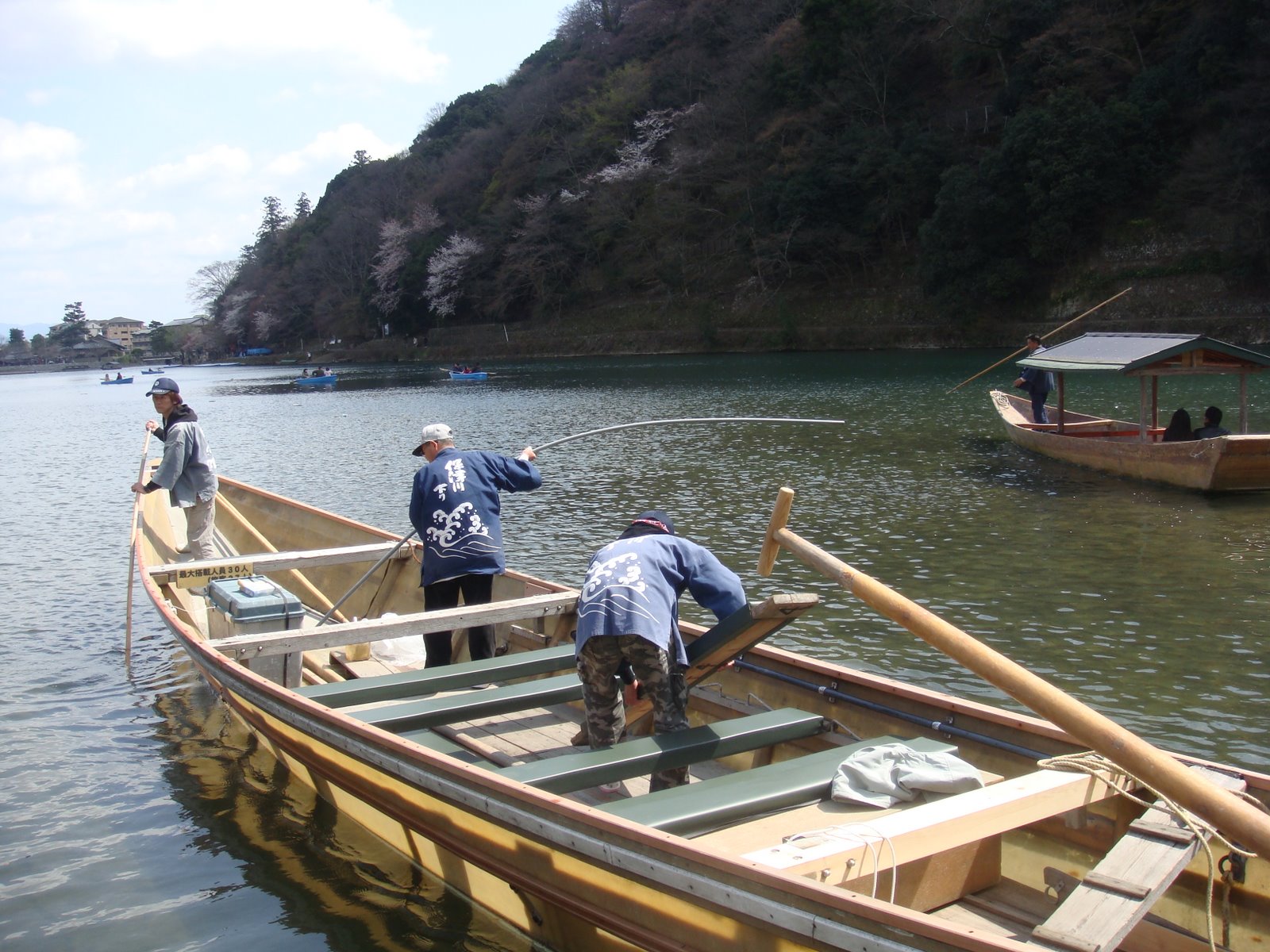
Arrived in Kyoto several days ago and have been working since our arrival. Shot a lot of footage already. 1000 tori gates of happiness, Arashiyama and a boat ride through mountain “rapids” down to Arashiyama, one of my favourite places in Kyoto. Some new footage but mostly picking up what I missed before and what has occurred to me after editing. One of the main advantages of our return is filling the gaps in my knowledge which I hope will make the script fuller and deeper.

These two films will be a completely new departure for Copernicus Films after recently completing the series “The Russian Avant-garde – Revolution or Renaissance”
However its fair to say that the two planned films are an offshot of the experience of the film David Burliuk and the Japanese Avant-garde
We have now returned to Tokyo after a week in Kyoto. Plenty of new material already which will work well in both films, although this is really only the start. I was particularly pleased with the Heian Shrine material of which I really didn’t have enough of. Taking a breather for a day while we settle into Tokyo. Apartment is quite good and we feel pretty comfortable with it – central and in the same area we lived in before so we know where everything is located. We will spend the next day or so relaxing, seeing friends and planning the next few weeks. Natasha has some things he needs to do as part of her own programme. We have a pretty good idea of what we want to do and what I want but it requires working out the finer details. Still trying to get into some kind of rhythm but that is just a question of time. Natasha as always giving full support and keeping a full photographic record of everything as well as getting on with her own business. This evening we will meet with Akira Suzuki who I interviewed for the David Burliuk film.
 Copernicus Films
http://english.ruvr.ru/radio_broadcast/2249225/10595720/
On June 24th Michael Craig was interviewed,discussing the 32nd Moscow Film Festival on Radio Voice of Russia with Estelle Winters, as well as his own film, “Meyerhold Theatre and the Russian Avant-garde” which is being shown as part of the exhibition “100 Years of Performance” at the Garage gallery in Moscow.