Moscow Sunset

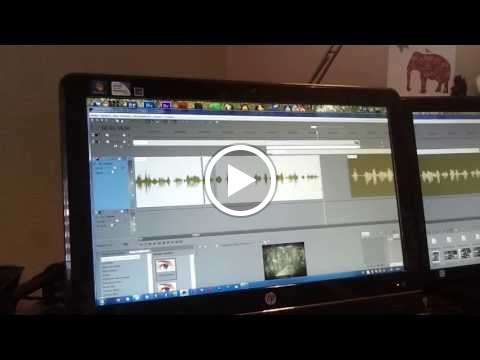
Just caught this beautiful Moscow sunset from my window. This is the best time of winter in Moscow. High pressure cold days with clear skies. Working hard trying to finish Stanislavsky film for the end of February so this is an interesting and delightful diversion. Revising and refining the film over and over adding bits here and tweaking other bits as well as ironing out mistakes. All out effort to get finished and released on schedule.

Watch the video below.

Garbushka Day

1129486401
Two days of warm weather. I took the opportunity of heading off to the Garbushka electronic market in Moscow to check out the lastest gadgetry. Garbushka is a huge wharehouse complex with shops and stalls selling everything electronic or digital from DVDs to cameras to washing machines. Dissappointing sight, hardly any video cameras worth looking at. The venders seem to think that every one has switched over to DSLRs and maybe they are right. It looked like nobody was buying anything. I found a good camera store and had a look at the DSLR Canon 60d. Its worth checking out Phillip Bloom’s review on this camera and other DSLR cameras if you are interested.  If I was going to go down this route thats the one I would buy. Checked out some lights and green screens as well. I took the trollybus back home in the afternoon past the new Moscow City complex which is rising higher and higher with each passing week. Dark gashes of green brown water beginning to appear in the ice on the Moscow River as the mild weather starts to take effect. Toying with some film ideas. Later got into the edit of “Stanislavsky and Russian Theatre”. Good progress and carried on with it today. A major stage in the editing of this film is now complete.

Moscow – Winter in monochrome

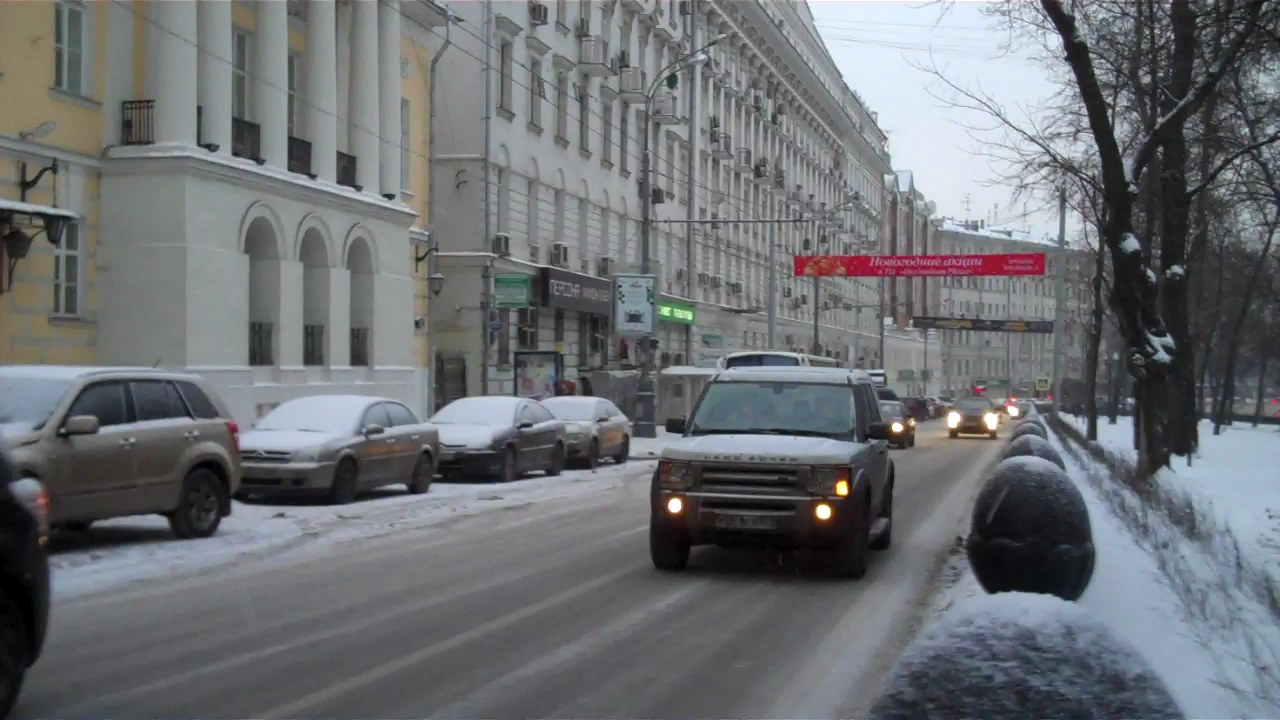
Moscow winters tend to become very monochrome in every sense of the word. When you stare out of the window everything looks like a black and white Japanese painting, all misty swirls and opaque brushstrokes. Today is one such day.  The steam pouring out from the tall chimneys of  electric power stations around Moscow adds a misty mystery to the atmosphere as the vapour drifts in copious clouds across the horizon. I’m not sure what long periods of such conditions do to the human psyche – perhaps I’m better off not knowing, especially after fifteen years as a resident.
To go out in -10 with a freezing wind blowing billowing snow off the north east or where ever, is not a pleasant prospect and most sane people avoid it. So what to do. No problem. Firstly I am writing this new blog. This I hope will be an occasional series of pieces or chronicles about a film makers life in Moscow and occasionally just the life of a simple human being who happens to live in Moscow.
Generally however the perspective will be from film making because that is what I do – make films in Russia and from time to time in other places as well – Japan for instance in 2009. As yet I am not sure exactly what shape this blog will take and how the content will develop but it is likely to have a more personal tone with simple and maybe even mundane reflections. However as the artist and photographer Alexander Rodchenko once wrote. “Our task in photography is to make the extraordinary appear mundane and the mundane appear extraordinary”.  Such a philosophy can unearth unexpected and rich deposits of knowledge and insight. So taking this as my starting point, off we go.

Progress with Stanislavsky

  Yesterday was good day for editing even with winter biting in the way that it is in Moscow. Not being able or wanting to go out can be a positive experience.  It gives me plenty of opportunity for editing and working on our present project “Stanislavsky and Russian Theatre” . For one reason or another I needed to spend Sunday around the Tverskoi Bulvar area of Moscow. I decided to shoot some footage around this area as it is associated with the theatrical history of Moscow and visually features in the theatrical archives. The snow had stopped for a while and it was not so cold. The light was perfect for what I had in mind. Soft and muted, giving a vaguely fuzzy and paradoxically warm tone to the images. 
Waiting to receive the second part of the narration for the film from the actor James Langton. After a bit of going backwards and forwards until we settled on a final version. Once this is complete then we will go through the final part of the narration and then should be set for sound mixing. There were some problems with the syntax of the script but these hopefully have been ironed out. 
Using After Effects to animate an old Moscow engraving or picture of a snow scene on Tverskaya, the main street which leads down to the Kremlin.  It is a quintessential winter scene form old Moscow and if it works it will be a very effective piece of animation for the film. From this I have been able to work out a sequence using other engravings and integrating them with footage I have shot already and footage I will be shooting in the near future once the weather lets up a bit.

"Faces of Moscow" Photographic exhibition in Moscow

The snow is starting to melt as the days become warmer here in Moscow. All day the “alpenists” have been nosily clearing snow and ice from the roof of our apartment block. A long day with not a great deal to show for itself in many ways although our Japanese lesson always makes us feel good. Learning Japanese through Russian is a unique experience but I prefer it. It keeps my language skills sharp. At the moment working hard on the editing for“Stanislavsky and Russian Theatre”. Its gradually coming together and hopefully I will hit the end of February deadline.
Yesterday visited a friends exhibition of photographs at the House of Journalist in Moscow. Slava Sachkov exhibited together with the photo journalist Sergie Shevtzov a series of photographs reflecting Russian life and people. Slava has photographed the portraits of many of Russia’s most influential cultural figures including Solzhenitzyn. We have worked together on various occasions and I am glad to say he was the camera operator on two of the films in the series about the Russian avant-garde –  “Mayakovsky” and “Meyerhold Theatre and the Russian Avant-garde” Therefore its a real pleasure to see his work exhibited at this major exhibition in Moscow. 
Below is a selection from the exhibition.
Poster for exhibition “Faces of Russia”

1465026880

1800571200

Work and More Work

Worked late into the evening and night on the film“Stanislavsky and Russian Theatre” I’ve been trying to get the first section right. If I can do this then most of the film will follow. Concentrating on the music sound track and the opening chords to the film which are both visual and musical and give a feeling of the atmosphere of Moscow at night. 
Metro very quiet – a definite absence of the usual bustle and crowds which is its main  feature these days.  Seems like many people avoiding travelling after the recent events, tense and subdued. 
Today bright and sunny but very cold. I noticed last night on my way home that the sky was clear and the air super crisp which denoted fine weather for the following day. Its my favourite time of the year in Moscow, in winter that is.
Will work more today on the film. Also working on background material for the film which will widen out the scope of the subject and be useful additional information to go with the film. This is my intention. That is to offer a range of supporting material in association with the film – the full interviews, articles, sites where information about Stanislavsky and Russian theatre in general. This will be in conjunction with The Stanislavsky Centre in London at the Rose Bruford College of Performance and Actingand the London Theatre Blog. In this way the squidoo site is very useful with its lenses and stuff which I am getting to know how to use. It offers an additional hub to theCopernicus Films web site and at the same time links with the web and other social media platforms. I like the way its is set up. At first I wasn’t sure about it but recent improvements have made it a useful instrument in collating and disseminating information about the work. I like the way it breaks down modules into specific subjects and groups them together.

Moscow in Mist

122850241
Moscow has been covered in a mantle of mist for the last few days. Yesterday I walked from my apartment down to he embankment of the Moscow river, past the Ukraine Hotel (Now the Raddisson), and the White House on up towards the curved bridge which carries the metro across the river like some fairground attraction every two minutes. I turned back to look at the new Moscow City complex, the peaks of the tallest buildings shrouded in a thick mist like something from a Chinese monochrome mountain landscape painting. Cars swished by in the slush left by the melting snow and as a result of the mild weather conditions. As I was near to the Museum of the East I called into a friend who works there and we talked for an hour or so, both glad that the long holiday is finally over and we can get back to work. I came home later grateful to get back into my work on a film about Stanislavsky – “Stanislavsky and Russian Theatre“.

3D Visions at Tokyo Metropolitan Museum of Photography

An exhibition,  3D Visions,  at the Tokyo Metropolitan Museum of Photography is an exploration of the practice of giving flat images the illusion of depth. 3D is the new by word in film making and this article casts a new light on this phenomena. I read an article about the exhibition which prompted some new thoughts on the subject which hadn’t occurred to me before. 3D could become a way of exploring new visual and compositional possibilities in film making. The following quote from the curator of the museum, Junya Yamamine is particularly apt and revealing in this context. “that filmmakers are striving to make 3D an expression of a “world view” rather than just stringing together cheap visual thrills”. The next step, he says, is for creators literate in the technology to develop new forms of expression.  As a film maker this is one of the first sensible things I have heard out about how to use and develop this format. Rather than being afraid of this technology film makers ought to learn how to use it to extend their expressive possibilities whether it is in film, animation or trans-media projects. The expression “world view” in relation to 3D is especially intriguing and I would have liked Junya Yamamine to have enlarged on what he had in mind by such an expression. For my own part I am interested in the philosophical possibilities of film purely as a medium of expression, that is the ability of film to reveal or disclose a truth not necessarily in a narrative form but as a conceptual entity. Instead of trying to fit 3D into our pre conceived ideas of story telling maybe we should give it free rein to reveal its own interior power. This exhibition seems to be an attempt to do this albeit in the realm of photography.
You can read the full article here:

St Petersburg Origins

In the early 1990s Russia changed its political system radically and the Soviet system of government was replaced in favour of a new political path with aspirations to democratize its institutions along western lines and economic models of capitalism. A lot has happened since that time. I mention it here as I was in Russia at that time for nearly four months, in St Petersburg in fact, working on a film for the BBC. My experience during that time  had a huge bearing on what I am doing at the moment which is making films and how I am doing it.

While in St Petersburg in 1993 I was introduced to an English guy called Adam Alexander or maybe Alexander Adams I cant quite remember.He had set up as a producer come distributor in the city. He had bought a largish apartment and I was invited around to meet him on one of my few days off during the production. Adam was a tall blond guy with a naive welcoming smile and manner, lively and generous with his personality and keen to get to know people. He showed me around the apartment and in one room he had a whole editing suite set up. A moviola was set up in one corner and abetacam editing suite set up in another part of the large room. I was fascinated by the whole operation in this romantic and phantasmagorical city. It had never occurred to me that you could set up an editing suite and production operation in an apartment. Now of course with computers and non linear editing everyone is doing it. However it was then that I decided I would live in Moscow and have a similar studio set up in an apartment at some time. It was a dream and I didn’t really believe it myself but one which some years later has come to be. As I sit here looking out across a wintry night in Moscow from my 7th floor apartment with a couple of computers making up a the backbone of an editing suite with extra screens for monitoring and so on.
After I lived in Moscow for some time and it came time to buy an apartment we looked for somewhere  in the centre and quite large so that it could double as a studio and a place to live. That way I felt it was a more economically workable investment. We knocked down a few walls during the renovation so that the apartment could double as a living space and a studio.For more complicated  technical operations there is a studio not 10 minutes away which I can use whenever I need to.

The Museum of the East in Moscow

The rain came to Moscow on Christmas day, melting the snow briefly before freezing into sheets of ice as smooth as glass on the streets and pavements. The trees turned into glass like sculptures as the water expanded into a transparent  coat of thick ice, covering the branches in a brittle quick-silvery casing.  Some trees have collapsed with the sheer weight of the ice. Many will struggle to recover when the ice melts having been denied oxygen for so long, unable to breath. No one remembers such a phenomena in Moscow and I certainly for all my years here cannot recall seeing such a thing, so beautiful and yet so damaging.
Natasha spent four days tending her exhibition of Ikebana at  the Moscow State Museum of the east in association with a Japanese artist who makes collage paintings with flower and plant material. I had to be there on hand as it were for emergencies and moral support.
The operator and director Slava Sachkov came to the exhibition with his wife Olga. A friend for many years in Moscow and camera operator on the film “Mayakovsky” and“Meyerhold Theatre and the Russian Avant-garde”, he had just returned from Vietnam for the ninth time. He is lecturing at a film school in Saigon and in seems to be single-handed helping to revive the Vietnamese film industry or so it seems to me. He stayed for a few hours and he talked about his work there and some of the visit he made to Hanoi. 
With time on my hands after Slava and Olga left, I wondered around the Museums labyrinth  halls. The collection is  is housed in the remains of a pre revolutionary classical building which had previously been the home of the Lunin family, whose most famous son Mikhail was a soldier, a poet and one of the leaders of the Decembrist movement. Its ornate pillared halls with 6 meter ceilings still retain their imperial grandeur of those far off days. I wandered alone most of the time through the muted interiors which house the different collections: The Iranian collection of paintings and cloths, swords and armour and costumes, the inheritance from another empire: the Chinese gallery with its scrolls and hundreds of sculpted  ornaments and figures made from ivory, jade and other rare stone material. Two galleries are devoted to Japanese art. In one hall there is a row of beautiful engravings on one side and   a series of calligraphy scrolls on the other wall. The centre piece in a huge glass case is a metre high ivory eagle in pose with wings outstretched as if to take flight.
As I walked by the mute exhibits, I tried to imagine if the pre revolutionary inhabitants ever imagined that their home would one day house a museum. The ghostly silence of each hall seemed to suggest they had not anticipated such a fate but were nonetheless content that the house was still standing and of benefit  to the thousands of visitors who pass through these halls to witness Russia’s intimate connection to the East.