New Rodchenko and Stepanova Exhibition in Japan

TAB Event – Aleksandr Rodchenko + Varvara Stepanova “Visions of Constructivism”

Starts in 4 days

At Utsunomiya Museum of Art

Media: GraphicsPainting

On display are 170 works by Aleksandr Rodchenko from the collection of the Pushkin Museum in Moscow.

[Image: Aleksandr Rodchenko (1924, 1965) collection of the Pushkin Museum]

Schedule

From 2010-09-19 To 2010-11-07

Website

http://u-moa.jp/ (Japanese) (venue’s website)

Fee

Adults ¥800, University & High School Students ¥600, Junior High and Elementary School Students ¥400

Venue Hours

From 9:30 To 17:00

Closed on Mondays

Note:On a Public Holiday Monday, the museum is open but closed on the following Tuesday.

Maps

Navitime (Japanese)

Yahoo (Japanese)

Access

25 minutes by bus from West exit at the JR Utsunomiya station or 20 minutes by taxi from the JR Utsunomiya station.

Address

1077 Nagaoka-cho, Utsunomiya-shi, Tochigi-ken 320-0004

Phone: 028-643-0100 Fax: 028-643-0895

When you visit, why not mention you found this event on Tokyo Art Beat?

Rodchenko and Popova at the Tate Modern

The Tate Modern is to host an exhibition of the graphic work of Alexander Rodchenko and Lubova Popova – “Rodchenko and Popova: Defining Constructivism” opening on 12th February 2009. 

 As part of the exhibition the DVD film “Alexander Rodchenko and the Russian Avant-garde” will be on sale in the gallery bookshop throughout the course of the exhibition where it can be purchased along side other films in the series “The Russian Avant-garde – Revolution or Renaissance” by Copernicus Films and directed by Michael Craig, (click on various links for more information) and include the titles “Meyerhold Theatre and the Russian Avant-garde”, “Mayakovsky” and “Architecture and the Russian Avant-garde”.

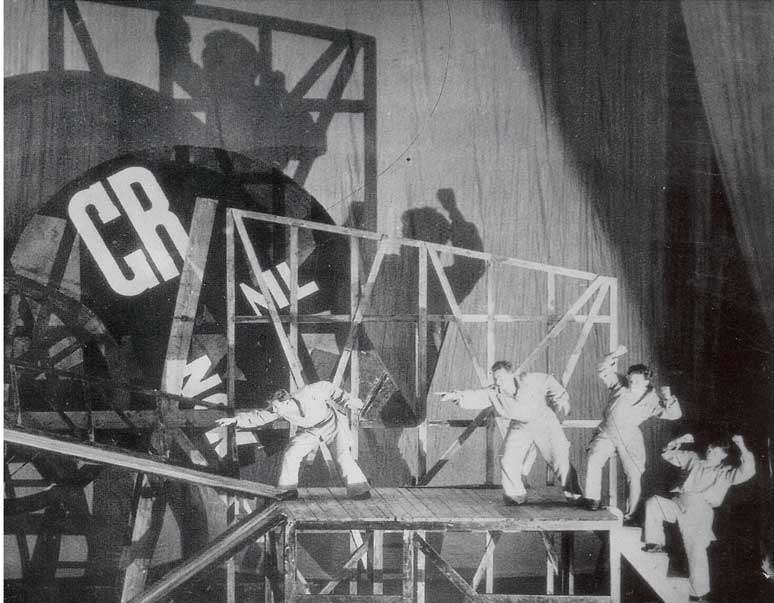
Rodchenko and Popova’s designs revolutionised the way art was conceived in its relation to advertising and society. Popova was active in the world of graphics but also spent a considerable amount of energy designing sets for the theatre. She designed a set for Meyerhold’s production of The Magnainimous Cuckold. The construction was a complete break from traditional concepts of theatre design and began a trend in constructivist set design in the Moscow theatre in the mid to late 1920s. 

Popova’s design of spinning wheels and raised platforms against a plain backdrop (see banner above) was the perfect way of fulfilling Meyerhold’s intention of combining the three dimensionality of the actors body and the two dimensionality of the stage design.
 The whole production showpieced Meyerhold’s new acting and performance techniques called biomechanics based on movement and dance. Popova’s work with Meyerhold is featured in the film “Meyerhold,Theatre and the Russian Avant-garde” which was filmed in Moscow and uses actors. The goal of the film was to understand the meaning of biomechanics as well as using archive footage and graphics to explore Meyerhold’s development as a director.

David Burliuk and Gauguin in Film

In 2008 Bob Duggan reviewed the film “David Burliuk and the Japanese Avant-garde on artblogbybob. His comments about the section which referred to Gauguin in the film led to a reassessment of the way the whole series of documentary films called The Russian Avant-garde – Revolution or Renaissance. was constituted, of which “David Burliuk and the Japanese Avant-garde” is a part and was produced by Michael Craig and Copernicus Films in 2007. On his site, as well as commenting on the quality of the photography in the film, Duggan explained that he was especially interested in the part of the film about David Burliuk and his trip to Ogasawara, a small Japanese island in the Pacific ocean about a thousand kilometres south of Tokyo. David Burliuk admired and drew inspiration from Gauguin. In 1920, after several successful exhibitions in Japan, Burliuk traveled to the Ogasawara islands to recuperate after his gruelling journey through Siberia and paint in the manner of Gauguin who also traveled to the island of Tahiti in the early 1890s in order to develop what he believed would be a new art for a new era. Gauguin was himself also strongly influenced by Japanese art and this overlapping of interest in the film was of particular interest to Duggan.

When this section was included in the film, not only did it have implications for the structure of the film, in so far that Burliuk was interested in Gauguin and wanted to emulate Gauguin, it also had implications for the entire series. Gauguin was a precursor of the Russian Avant-garde and strongly influenced this unique artistic event in the history of world art. In this sense the episode devoted to Gauguin did not simply draw together strands of the Burliuk film but also drew the strands of the entire series together, connecting the sometimes disparate and amorphous phenomena which is known as the Russian Avant-garde. The Russian avant-garde incorporates movements from neo-primitivism, rayonism,constructivism and lasted roughly through a period from the 1880s until the early 1930s. This section of the film about Burliuk, gave the series a prisim though which all the various themes of the series could be viewed even if the structure is somewhat imposed on the material. Self evidently any structure which is applied to the history of the Russian avant-garde is not a true reflection of its development but merely a method of organising material into a coherent and accessible form for digestion by the public or viewer. The most important thing while preparing such a film is to be aware of this framework as something which is imposed and try not allow it to dominate an understanding of the material. In this way the viewer can reach their own conclusions or can be stimulated to discover the subject further for themselves. An example of the problems which arise for instance is associated with the whole project of presenting artists as if they were individuals working in isolation of the world around them. I will try to explain this in more detail.

In the west we privilege the individual over and above the collective and this is a result of our liberal humanist tradition derived form Christian-Judaeo concepts of the individuals place and role in the world. The development and progress of western culture is presented as a parade of past individual geniuses who serve as pillars or supports upon which society rests and in the present a further group of lone geniuses which will propel it into the future. For many Russian avant-garde artists and writers this obsession (or what they considered an obsession) with individual genius was in their eyes an obstacle to artistic progress and a false assessment of the contribution by artists to the overall development of society. As Alexander Rodchenko commented in the 1920s that in the modern era, in the age of the machine and industrialisation …”there will never be a unique airplane or car” ..therefore …”we need artist workers, not geniuses”. This belief was further underlined by Osip Brik, the futurist thinker who announced in a clear attack on the notion of authorship and its connotations of genius, that if Pushkin had not written Eugene Onegin somebody else would have sooner or later. This brings me back to the documentary arts series: The Russian Avant-garde – Revolution or Renaissance. Nearly all the films where about individuals “Rodchenko and The Russian Avant-garde”, “Meyerhold, Theatre and the Russian Avant-garde”, “Kandinsky and the Russian House”, “Mayakovsky” and of course “David Burliuk and the Japanese Avant-garde”. Only one film in the series “Architecture and the Russian Avant-garde” has a more general thematic structure, however even in this film I concentrated on three main figures – Malevich, Tatlin and Constantine Melnikov. It was very difficult to wriggle out of such a thematic straight jacket but nonetheless in each film a concerted attempt was made to relate the individual accomplishments of each artist to the wider concerns of the period and not portray them as lone geniuses working in isolation of each other but part of an artistic movement which had deep roots in the social and political events of the early part of the 20th century. Artists like Gauguin, Kandinsky, Burliuk and Rodchenko were grappling with some of the same artistic problems of their age, albeit exploring different solutions depending on the context in which they found themselves. The film “David Burliuk and the Japanese Avant-garde”, with its reference to Gauguin’s influence on the work of the Russian avant-garde artists of the era, presented an opportunity to draw together many of the threads which constituted this artistic epoch without forcing a preordained framework on the series. Instead the viewer could make up their own mind as to how the phenomena of the Russian avant-garde developed and influenced art in Russia before and after the revolution.

Modern Art Venue Opened in Moscow

A new modern art venue has been opened in Moscow in September 2008. It is called the Garage and is literally an old Bus garage which has been renovated and bought by the Russian billionaire, Abram Abramovich as prohect managed by his girlfriend Dasha Zhukova. However it is not simply an old garage for buses but one of the most outstanding industrial architectural projects of its day. The arage was designed in 1925 by Constantine Melnikov who was one of the most innovative architects of the post revolutionary period of the 1920s and 30s.

In 1999 The film “Architecture and the Russian Avant-garde” was shot in Moscow and is part of a series of six films by Copernicus Films about the Russian avant-garde of the 1920s an 30s. In the film I devote a large portion of time to this artist and architect along with Malevich and Tatlin whose artistic innovations and experiments contributed to the devlopment of Russian and Soviet architecture.

After I filmed the somewhat down at heel exterior of the building I could never of imagined that it would eventually be used as an art gallery in Moscow, especially for a gallery which will display wooks of art by artists who previously had to present their work through underground channels or abroad.

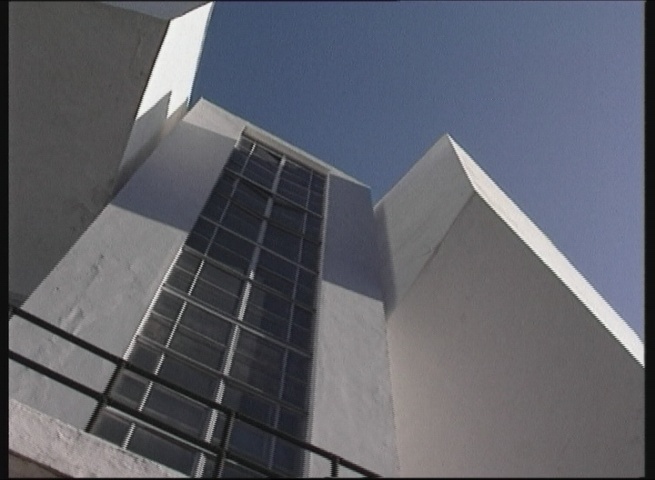
When I was filming it was still being used as a garage for the municipal transport system. I desperately wanted to film inside but was denied permission by the authorities. However the unique and innovative design was there for anyone to see. It is built in a series of parallegrams to maximise the use of space in combination with ensuring a high level of functionality. The growth of car and petrol driven transport required new and bold design answers to cope with the new technological phenomena. Melnikov designed several other garages in Moscow which still exist today and are still in use. Below are pictures of the Intourist Garage (below) with a sweeping circular window which houses a ramp leading to the various stories.

Other architectual projects include “Club Rusakova” (below) . Melnikov was against the use of flabby weak architectual design and prefered load bearing structures with a clear functional aspect but at the same time aesthetically coherent.

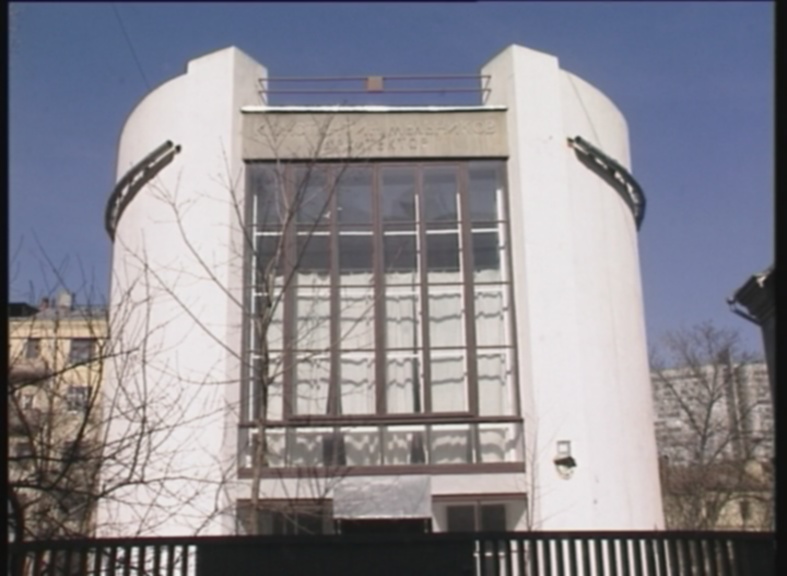
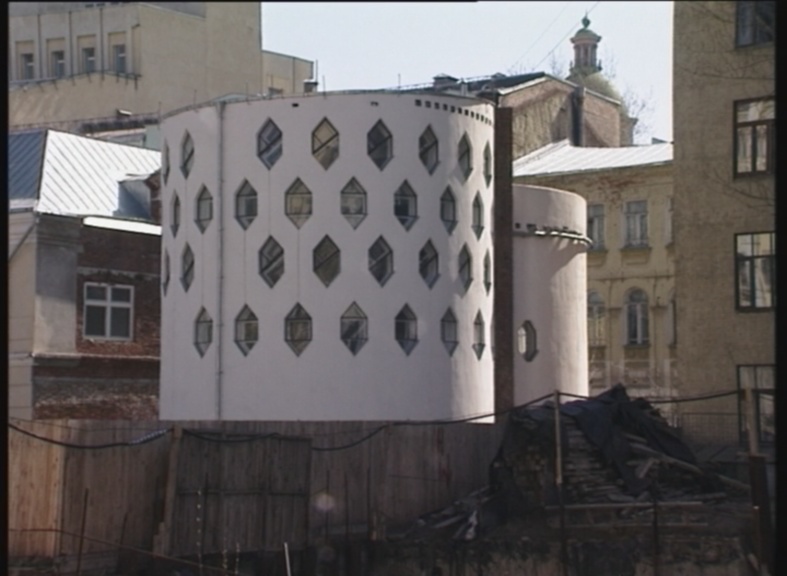
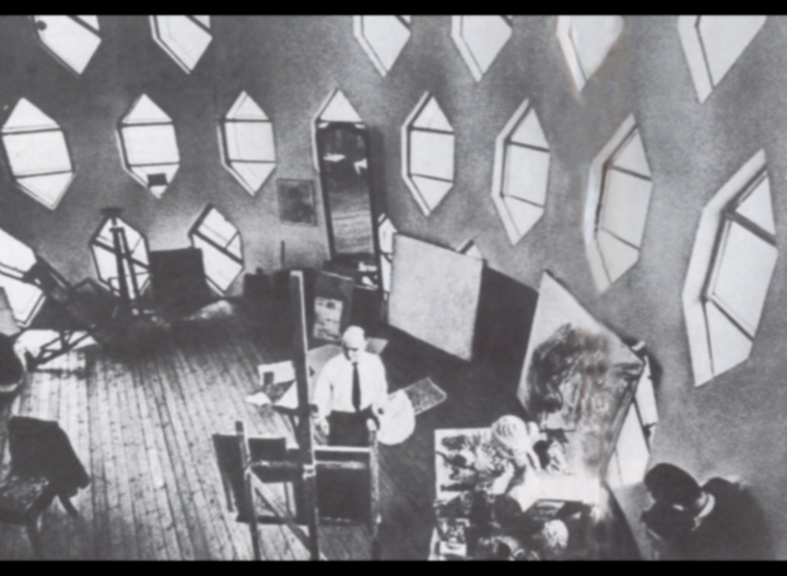
Melnikov also built his own house(below) in the centre of Moscow in order to demonstrate his design for circular homes. These buildings and many others also appear in the film by Michael Craig “Architecure and The Russian avant-garde”

For a review of the film “Architecture and the Russian Avant-garde” click here

The Opening of “The Garage”

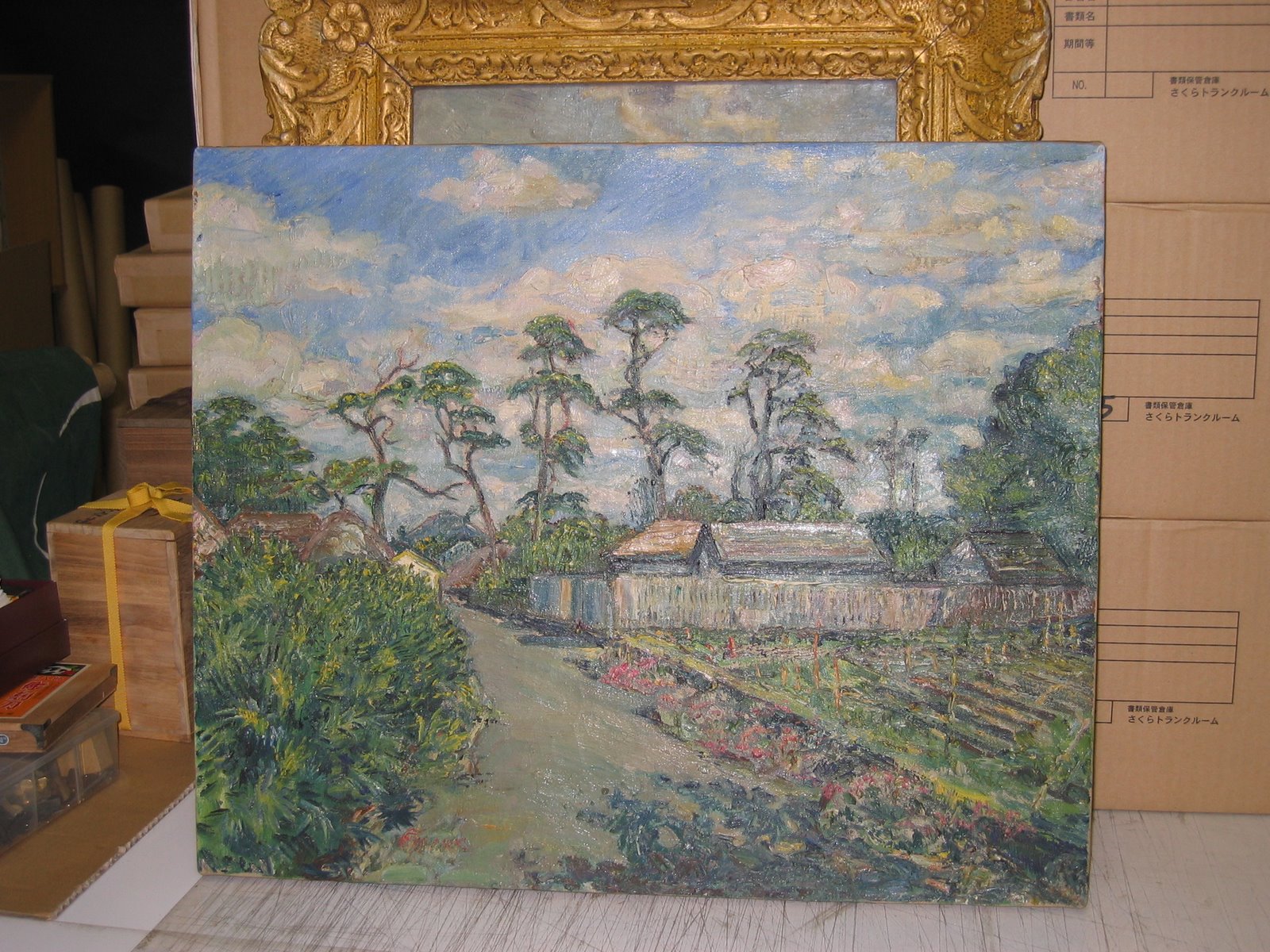
New David Burliuk painting found in Tokyo antiques market

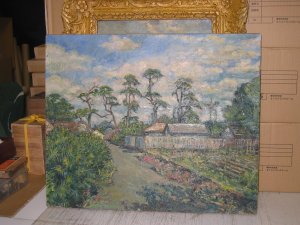
This entry is a further sequel to my work with Akira Suzuki on the film “David Burliuk and the Japanese Avant-garde”. At the end of last year and the beginning of this year we spent three months in Japan researching material for a film. While we were there we spent a great deal of time with Akira Suzuki who we interviewed in the film “David Burliuk and the Japanese Avant-garde”. which is part of the series by Copernicus Films The Russian Avant-garde – Revolution or Renaissance. The reason being he lived only ten to fifteen minutes from where we had rented an apartment for the duration of our stay. One Sunday morning he invited us to an open air antiques market in the grounds of the Sinto, Tomioka-Hachmangu Temple. We bought several items which were of interest to me and my wife. Among the bric a brac were old paintings, statues, chinaware and assorted vases and antiques. A short while ago Akira Suzuki contacted me with some startling news. At the very same market he had acquired a genuine David Burliuk painting (see picture below)from the period of his two year stay in Japan. To find a new painting by Burliuk is a rare event in itself but for one to turn up at such a market, moreover the same market which we had visited with Akira Suzuki, was astonishing. As I have already written early Akira Suzuki is a specialist on the work of David Burliuk in Japan and I had invited him to be interviewed for the film “David Burliuk and the Japanese Avant” on my first trip to Japan.

Even though the painting is a bit damaged a good art restorer would be able to bring the painting back to something approachng its original condition. Its difficult to say what the location is but it is tempting to speculate that it is a scene from Ogasawara, an island in the pacific Ocean where Burliuk and Palmov stayed with their families in order to paint much in the manner of Guaguin who went to live on Tahiti to find new inspiration for his work. It certainly resembles the island but it could be Oshima which they also visited. Akira Suzuki is not sure himself. It would be good to find out one way or the other

David Burliuk and the Japanese Avant-garde


“David Burliuk and the Japanese Avant-garde” was released on DVD in the autumn of 2007. The film charts the work of the Russian futurist David Burliuk in Japan. After he left Russia during the Russian civil war, David Burliuk spent two years in Japan and put on exhibitions in Tokyo, Kyoto and Yokohama. His influence on the growing Japanese futurist movement was immeasurable where he worked with Japanese artists such as Kinoshita and Murayama. The film features locations in Moscow, Tokyo, Kyoto and a small Island called Ogasawara in the Pacific Ocean which Burliuk visited in the manner of Gauguin. Japanese art was was gradually transformed in the Meiji period of the late 19th century and early 20th century after the Meiji restoration which heralded Japan’s entry onto the global stage.

Perceptions of Japan as a closed and traditional society changed in the aftermath of the Meiji restoration. There was a Rush to modernize and industrialize Japanese society. Some artists were beginning to recognize the hegemony of industrial society and its profound implications for art and culture. It spawned a counter culture in Japan with a tendency to rebellion by those who saw in modernism a progressive opportunity but also its tendency for alienation. However it was Burliuk who translated to Japanese audiences developments in Russian art .

After just two weeks in Japan he had organised an exhibition in Tokyo entitled “The first Exhibition of Russian Paintings in Japan” which opened on Oct 14th at the Hoshi pharmaceutical head quarters in Kyoboshi. There are few records left of this exhibition but reviews described astonishing works of dangling socks and matchboxes attached to paintings and painting rendered on cardboard.

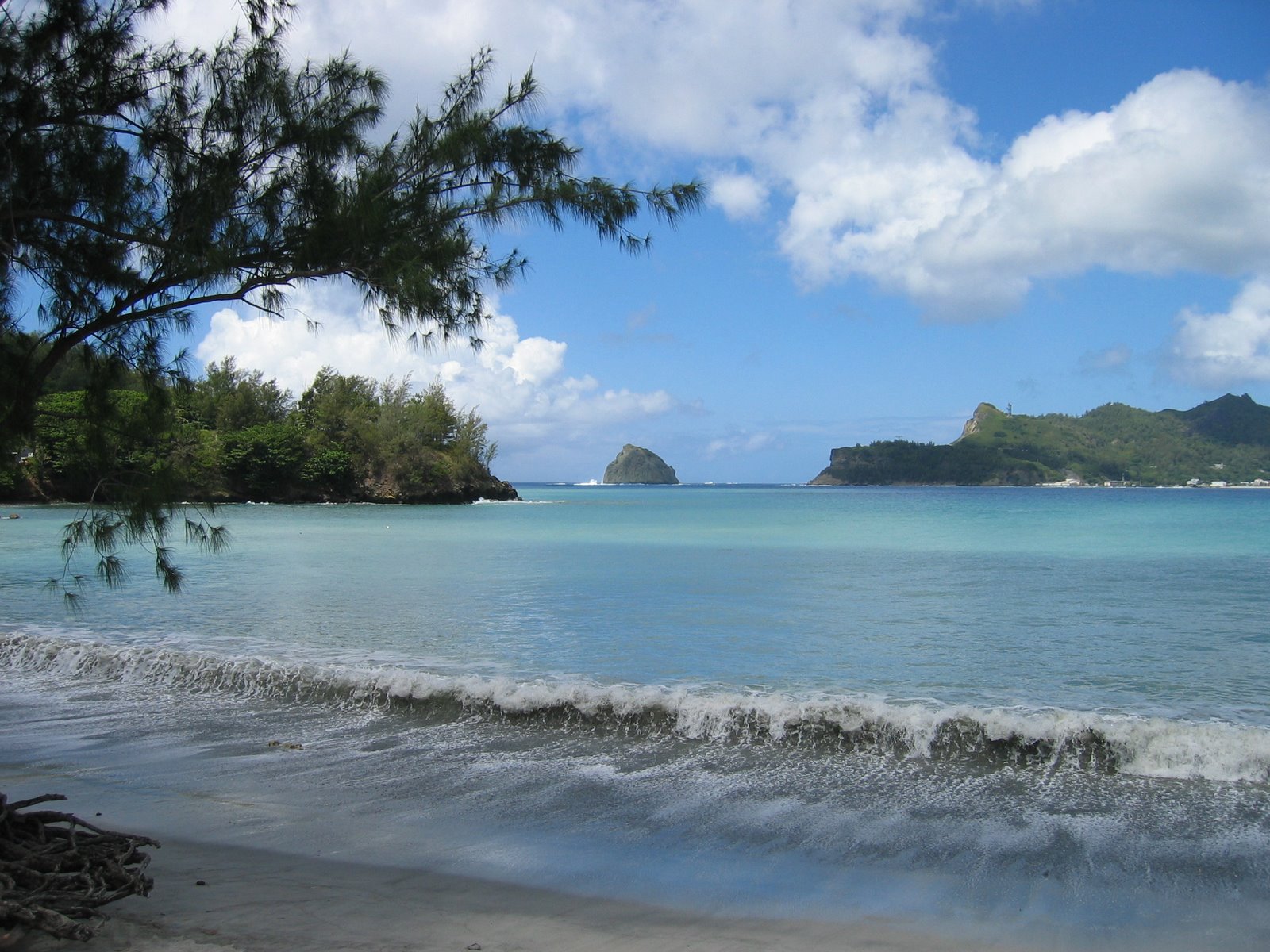
Part of the film involved visiting an island called Ogasawara which is situated in the Pacific Ocean about 1000 kilometres south of Tokyo. The Journey takes around 26 hours and can only be reached by ship. Burliuk visited the island and spent about three months there painting and relaxing after his mammoth journey through Siberia and onto Japan and the various exhibitions in Tokyo and Kyoto. It made a warm change from the icy blasts of a siberian winter. I had already decided that I would follow Burliuk’s journey to this island as well as film in Tokyo and Kyoto. I had already completed half the journey, albeit on a comfortable flight from Moscow to Tokyo. Now it was time to go all the way, as far as Burliuk himself went.
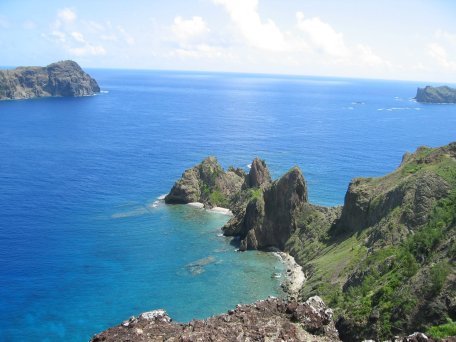
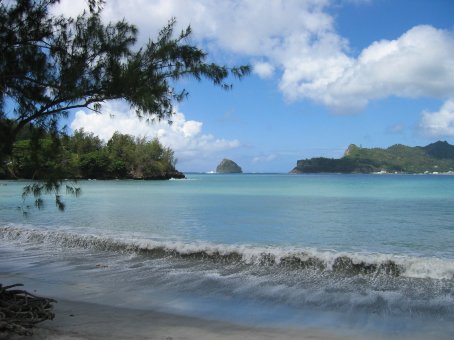
Burliuk was a keen student of Japanese culture and much like his idol Gauguin he immersed himself in Japanese culture and art. Interestingly enough Burliuk’s Journey to Ogasawara began when he left by ship from a point not far from where Basho started his travels in old Edo the former capital of Japan which became Tokyo. Basho was another wanderer poet much like Burliuk who was destined to travel throughout the world seeking new inspiration for his art and life.

I wasn’t sure how the Ogasawara material would relate to the rest of the film. In fact sometimes I doubted the wisdom of going there at all. This all changed after my interview with Akira Suzuki. A friend of a friend recomended me to interview him as a Japanese expert of Burliuk’s time in Japan in general. He writes about Burliuk’s work and art and translates his books from Russian into Japanes He as published several translations of Burliuk’s writings from Russian into Japanese as well as a number of books about Burliuk and Fialev, the Czech artist who traveled to Japan and Ogasawara with Burliuk. (Follow this link for more information about Akira Suzuki’s work).
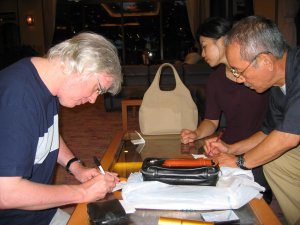
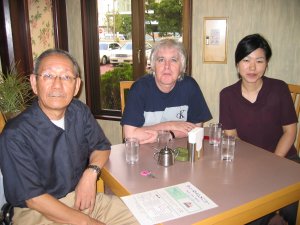
Akira Suzuki turned out to have a wide knowledge of Burliuk’s life and work in Japan, which very few people would have known if any at all. This inside knowledge and understanding proved invaluable for the film. This was especially true when he explained how Burliuk wanted to visit a south sea island and spend time painting there much like Guaguin. This was the reason he visited Ogasawara. Suddenly many things fell into place and I understood why Ogasawara would be important to the film and indeed the series about the Russian avant-garde overall. Burliuk was the Father of Russian futurism and was heavily influenced by Guaguin as was much of the Russian avant-garde itself either through Burliuk’s influence or generally through other artists.
Guaguin himself when searching for a new form of art drew upon Japanese art as a way of discovering a new style or a new direction in art. As he said himself “artists have lost, ……all their instincts, one might say their imgaination and so they have wandered down every kind of path in order to find the productive elements they hadn’t the strength to create”. Gauguin was the first European artist who consciously sought to synthesis the expressive means of various epochs and peoples with European artistic techniques, in particular the Japanese, opening up new possibilities for painting and art.

Burliuk also was forever seeking new rhythmical structures and innovations in his work, simple solutions for expressing new ideas and phenomena. In this the Japanese artistic values of the ornamental organisation of the surface of the canvas would provide him with ample material for study.

Akira Suzuki explained how Burliuk not only organised exhibitions and gave lectures, he thoroughly familiarized himself with Japanese life. He took care to understand a complicated culture full of diverse subtleties and nuances. Burliuk tried to penetrate the meaning that lies embedded in the aesthetic life of Japanese culture and art much like his idol Gauguin.

The importance of Gauguin for Burliuk cannot be underestimated. Gauguin was a precurser of the 20th cnetury avant-garde movementas a whole. His independent and bold search for a new form of art had an enormous influence on the development of the decorative principles of the Russian avant-garde. Far from the turmoil of civil war and revolution Burliuk believed he could live and work in an environment of relative safety.

All at once, talking with Akira Suzuki, the themes of the Russian avant-garde, David Bulriuk, Guaguin, Japan, Japanese futurism and a south sea island merged into something concrete and understandable in the context of a film and in particular a film about Burliuk and his relation to Russian and Japanese futurism.

From his writings we can imagine Burliuk’s thoughts as in the early morning light the ship approached Ogasawara. Coming out on deck he could gaze on the fantastic sight of an island he had never seen before.

Akira Suzuki was a knowledgable and relaxed interviewee. The thing I liked most about him on screen is his easy and friendly delivery. I had the choice of interviwing him in English or Japanese. In the end I went for the Japanese with English subtitles as his enthusiam and excitement for the subject comes through when speaking in his own language. This was exactly the mood I wished to create in the film and in this Akira Suzuki helped me a great deal. The things he knew about Burliuk had a personal quaility about it, one could feel that he had a strong attachment towards Burliuk and a feel for the subject as well as having engaged in the research. His anecdotes and stories about Burliuk in Japan could only have come from sources close to the Japanese.

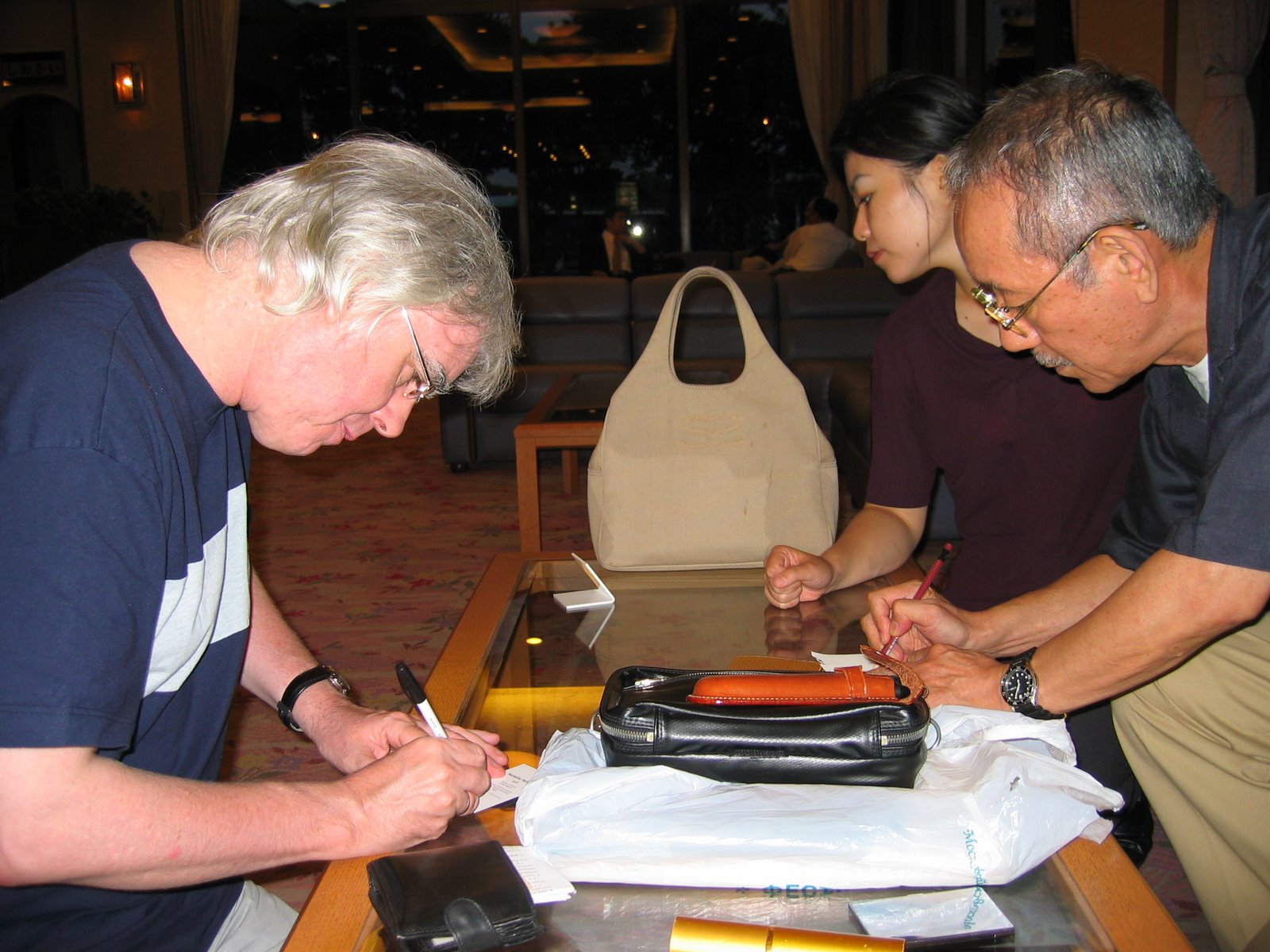
On a later visit to Japan Akira Suzuki took myself and my wife Natalia to the very place where Burliuk boarded ship to Ogasawara. It is a quiet stretch of water in the heart of Tokyo. Later the same day he took us to a nearby region where the Hakia poet Basho lived and composed his poetry and from where he set off on his journeys around Japan seeking inspiration and enlightenment. I couldn’t help thinking of Burliuk who set off not very far from the spot where Basho undertook his spiritual journeys around Japan and wondering if Burliuk felt any connection with the great poet of Japanese literature given that Burliuk was as much of a poet as he was a painter.

A few days later Akira had another surprise waiting for us. He asked me would I like to see an original painting of David Burliuk which a friend of his had in his possession. Of course we jumped at the chance. The next day we arranged to meet and we all travelled by metro to Ikejiri-Ohashi.

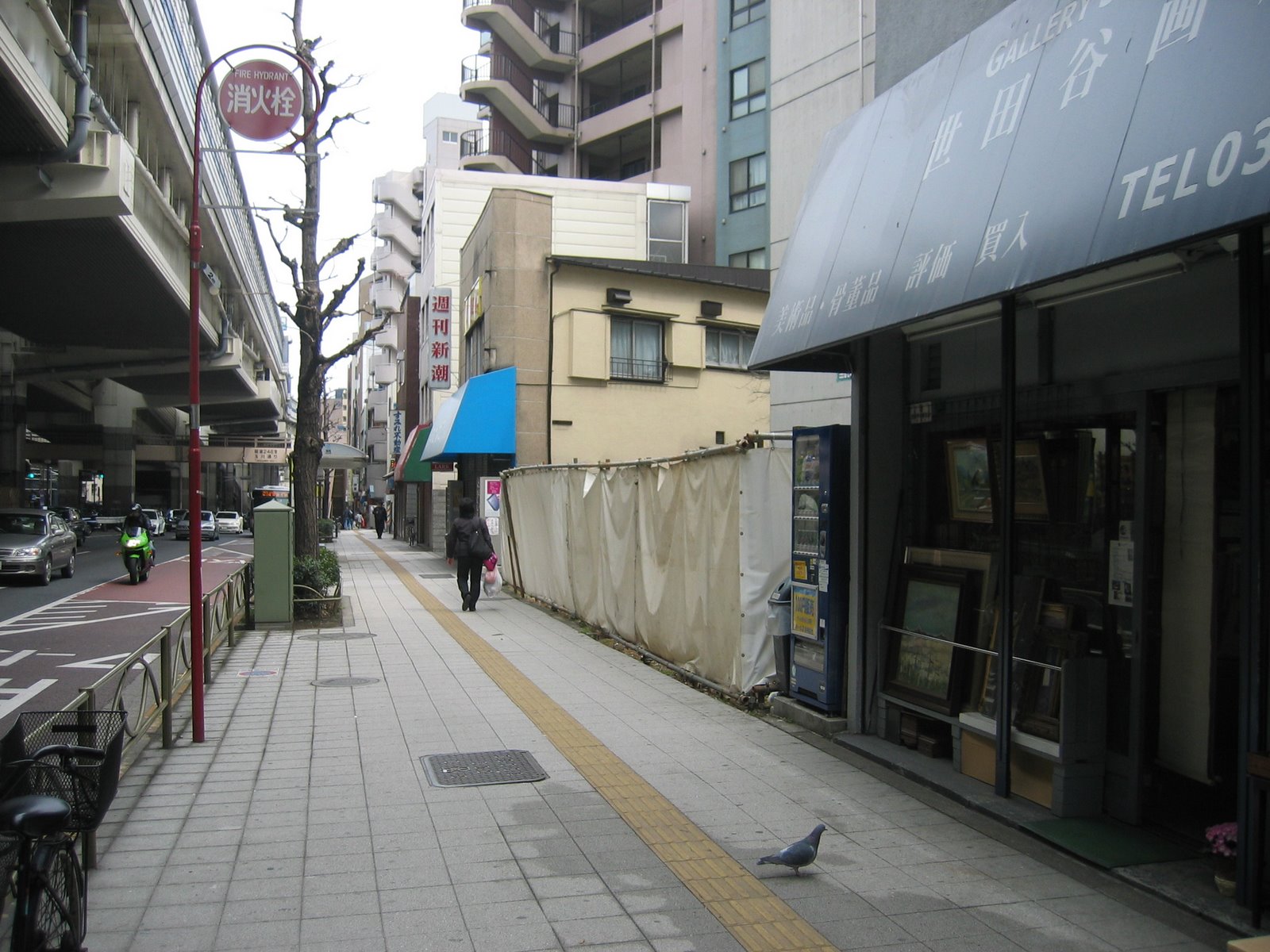
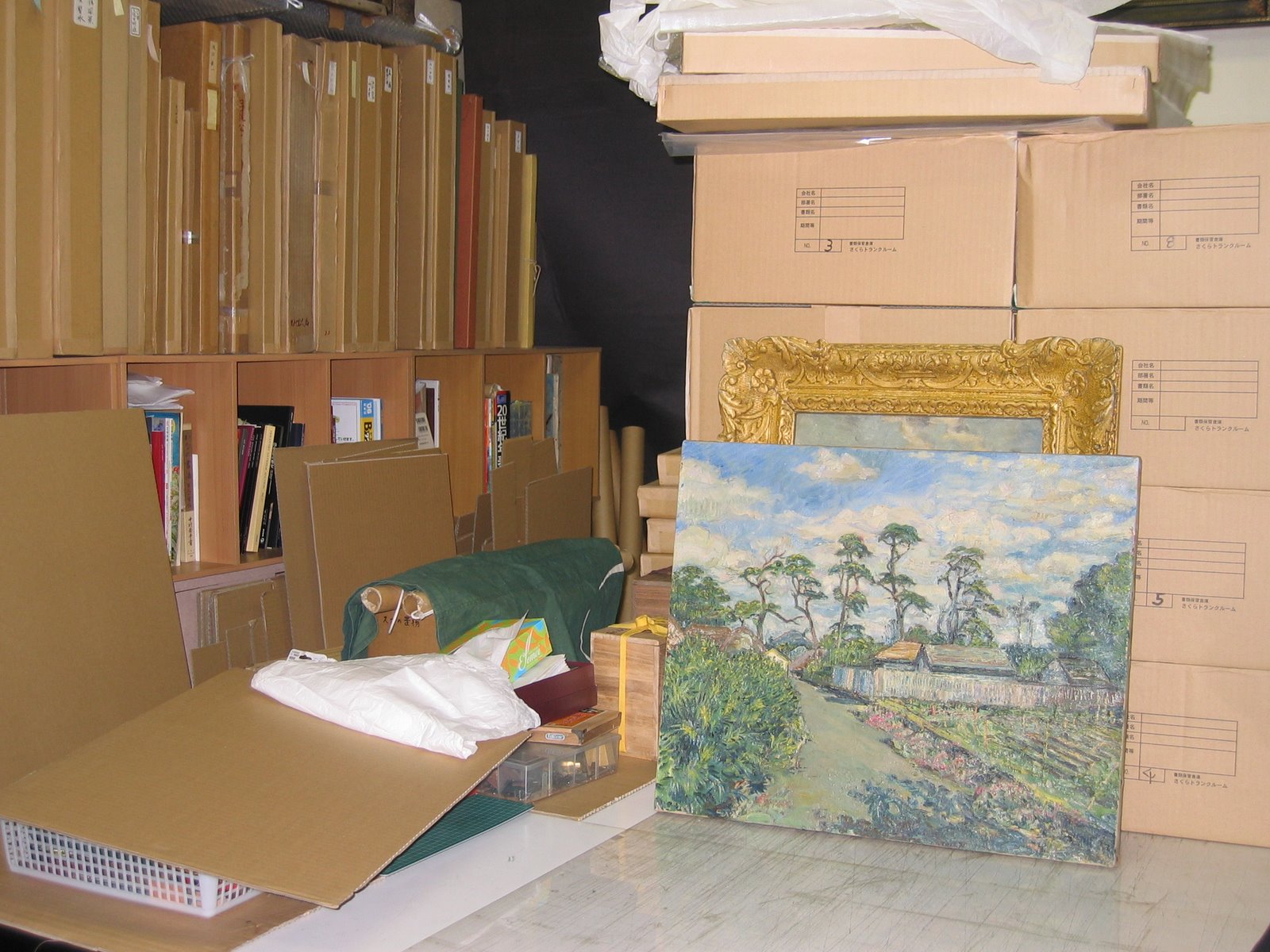
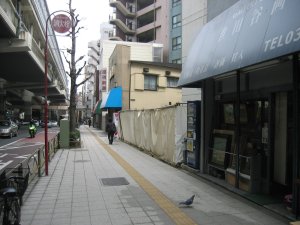
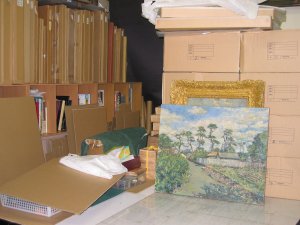
A short walk from the station was a small modest shop-front gallery overshadowed by one of those giant exressways which are raised above the city on tall thick columns and criss cross Tokyo. We went inside and were introduced to a gentle mannered man in his late 50s who owned the gallery. After some tea and getting to know each other he brought out a cardboard carton and gradually took off the wrapping to reveal a beautiful unframed canvas of a village on Oshima in 1920 which Burliuk painted on one of his visits to the island. For the first time I realised why some people want to collect or horde great works of art. The magic of being close to something or someone through their work was literally breathtaking, especially somebody who I had been researching for so many months. It felt like small currents of electricty running through my spine. I thought I had come to know Burliuk quite well but gazing at a work of art which had been painted in Japan and which I could pick up and look and touch and feel, was a very different experience from seeing something in an art gallery and moreover by an artist of such stature in the Russian avant-garde. When I turned the painting round to look at the back, there in faded Russian and Japanese, was written, that the painting had been exhibited in the “First Exhibition of Russian Painting in Japan”. I and Natasha examined the painting for maybe half an hour. It was an experience that I didn’t really expect, in so far as looking at a painting can be such an energising event. It is something which is difficult to put into words
The second half of the film is about Burliuk’s influence on the Japanese avant-garde itself which was considerable. After he emigrated finally to America with his family the legacy of his time in Japan continued to live on and influence Japanese futurist artists like Kinoshito and Murayama who had a strong influence in all areas of Japanese cultural life – literature, architecture, the visual arts,

design and to a large extent theatre.
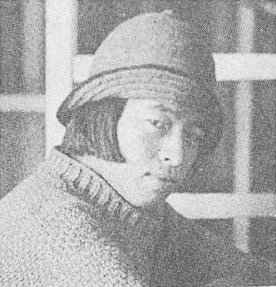
The explosion of passions was reflected in the two exhibitions оf the Sanka association, in the second half of September 1925. Because “Sanka in the Theater” attracted wide attention, the exhibition was crowded with more visitors than the organizers had expected. Augmented by an extra 122 works, this exhibition was the largest оf the avant-garde movement. Disparate media and subjects scandalized the public: а Dadaist assemblage of two ropes entitled Lumpen Proletariat А апd B was executed by Toki Okamoto who had come to the gallery and made it on the spot; the entrance tо the gallery was decorated by а large, three-dimensional hybrid assemblage; apart from these Dadaist pieces, some pure geometric works were also shown.

The exhibition was an experiment, a scandal and a social event.


The Japanese avant-garde attempted to cut across two opposing trends in Japanese art. The national traditionalist approach in art and the westernization of art which had gripped Japanese culture. Informed by Burliuk’s experiments and their own innovations they searched for new art forms which would liberate them from the confines of these two trends.

Burliuk conceived elements of surface plain, texture and colour as tangible elements in painting asserting the two dimensionality of the picture surface. Such bold experiments in painting were readily taken up by Japanese futurism and the avant-garde in general giving the innovations of Japanese artists a global outlook and focus at a time when Japan was still emerging from a period of isolation and coming to grips with industrialization and its social consequences.


Akira Suzuki: Books, Translations and other work

Below is a selection of Akira Suzuki’s work. He lives in Tokyo and is a one of the leading experts in Burliuk’s work and life with special reference to Japan. His research into this subject was featured in the film, about David Burliuk’s 2 year stay in Japan between 1920-22. Below is a clip form the film “David Burliuk and the Japanese Avant-garde” which features an interview with Akira Suzuki discussing Burliuk’s work in Japan.


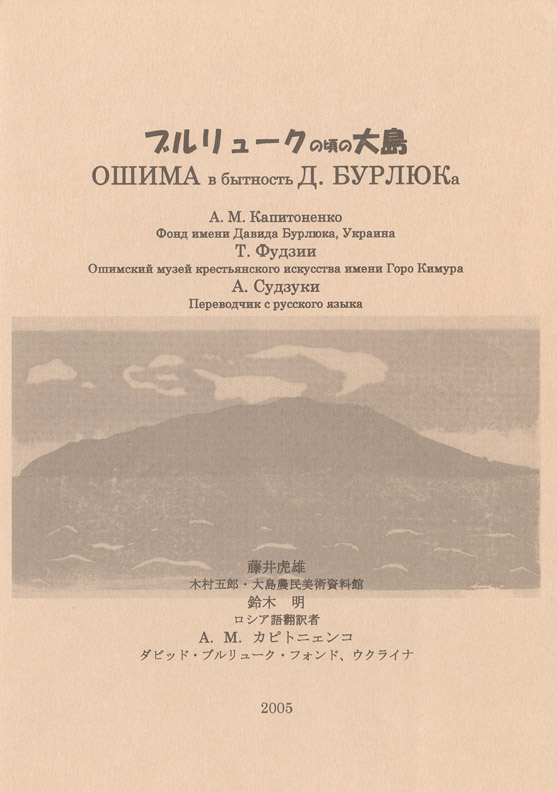
Akira Suzuki’s Translation into Japanese of David Burliuk’s book “Oshima” with commentary. David Burliuk wrote this account of the time he spent on Oshima.

In 1920 David Burliuk and Vacaslav Fiala traveled to Ogasawara with their families to paint and work. This is a translation from Russian into Japanese of their stay on this island which is roughly 1000 kilometres to the south of Tokyo in the Pacific Ocean. There is a commentary in Russian by Akira Suzuki and Nobert Evdaev. This is a comprehensive account of Burliuk’s and Fiala’s journey to Ogasavara with an extensive reference to Japanese archives


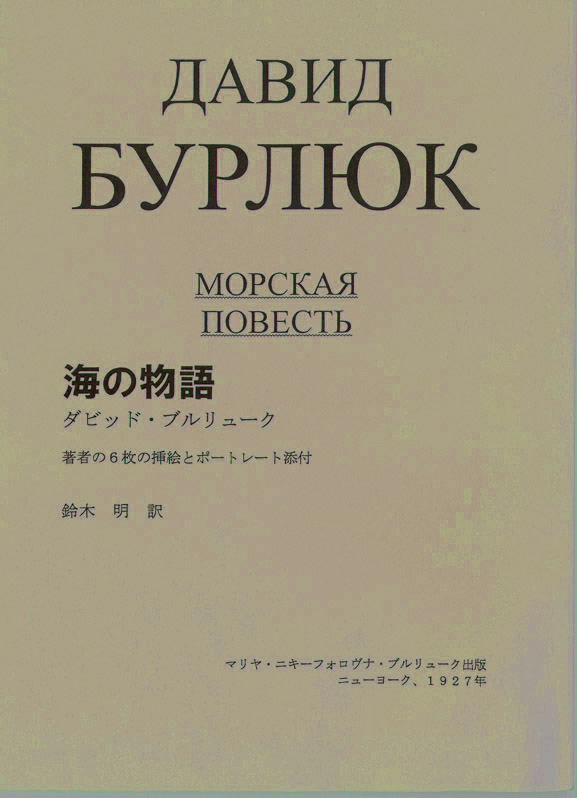
A translation of Burliuk’s story of life in Japan during his visit there

A translation of Burliuk’s work about the Crimea written in Vladivlastok just before he traveled to Japan


This is a translation into Japanese of the Czech artist Vacaslav Fiala’s account of his stay on Ogasawara. Akira Suzuki has translated this work into Japanese and included reproductions of Fiala’s paintings, drawings and engravings. The book is a perfect compliment to David Burliuk’s account of Ogasawara as the two men traveled together to paint on Ogasawara much in the manner of Guaguin who in the previous century traveled to Tahiti for new sources of inspiration and impressions.

Architecture and the Russian Avant-garde

The second film in the series “The Russian Avant-garde” grew out of the first in that Rodchenko phot0graphed many of the new buildings which had been built in Moscow and which were themselves a product of the avant-garde. Through researching Rodchenko I quickly became interested in the Russian avant-garde as a whole and the outline of a second film had already began to emerge before the first was finished. I researched the buildings I wanted to film and spent a few weeks travelling across Moscow discovering where they were located and how best to film them. I really wanted to show the relationship between avant-garde art and its influence on architectural design of that period. I decided to structure the film around 3 main figures: Tatlin, Malevich and Melnikov. I wanted to start work in April using the same cameraman, Valentin Savenkov, as I used on the Rodchenko film. I also wanted to start in early April as some of the buildings would be hidden by trees once the leaves started to grow. We managed to get going in late April but because the spring is late in Moscow there was no real problem with leaves on trees. Some of the buildings were suffering from neglect as can be seen in the film but many were in remarkably good condition. Filming on the streets of Moscow is not without an occasional adventure and the Architecture film was no exception. The first problem arose when we wanted to film inside the house that Melnikov had built for himself, a construction of two cylinders inter-cut into each other. Valentin said that maybe Melnikov’s son who lives there now would let us film inside. It might seem amateurish, not having planned this before and then suddenly decide to knock on someones door on the off chance that they will allow us to film inside their home but in Russia this is quite acceptable. We rang the bell and the gate was opened by an eighty year old man who was Melnikov’s heir and son. Thin and wiry, he looked at us with a quizzical expression of curiosity and annoyance. Valentin explained the situation and then let slip that the film was about constructivist architecture. I knew this was a mistake and I was not making a film about constructivist architecture in any case. Melnikov’s son looked at us with a hurt expression in his eyes, saying, in an pained tone of voice, “Papa wasn’t a constructivist – Papa was an artist”. That was it, I knew we weren’t going to get in under any circumstances. I went back a few days later by myself and tried to negotiate with him but again it was no good. I could see he was tired of film crews and people wanted to look inside the building all the time.

Later there was a building which I wanted to film not far from Lubiyanka. It was a government building and I had already spotted a policeman standing nearby but before I could warn Valentin he had the Betacam out and up on the tripod. The Policeman waved his baton at us and Valentin took the camera off the tripod and we moved on. All in all it wasn’t a good day and I didn’t get everything I needed.

I decided to try and film some of the more difficult buildings with a smaller camera on my own which wouldn’t draw such attention to myself. I shot several buildings which I needed for the computer graphics which I planned and some of the buildings which I had missed the first day of shooting. I was filming a building in a quiet region of Moscow and gradually I could feel that people were checking out what I was doing. I had feeling someone would call the police. I just got everything that I need filmed and in the distance I could see a police car coming down the road. Fortunately I already had the camera packed away and was walking up the road towards were they were coming from and they drove straight past me. They stopped at the building where I had been filming and out of the corner of my eye I could see they were speaking to some one who came out of a building opposite. I dodged quickly into a small road between two buildings and walked quickly to the metro where I was able to blend in with the crowd.

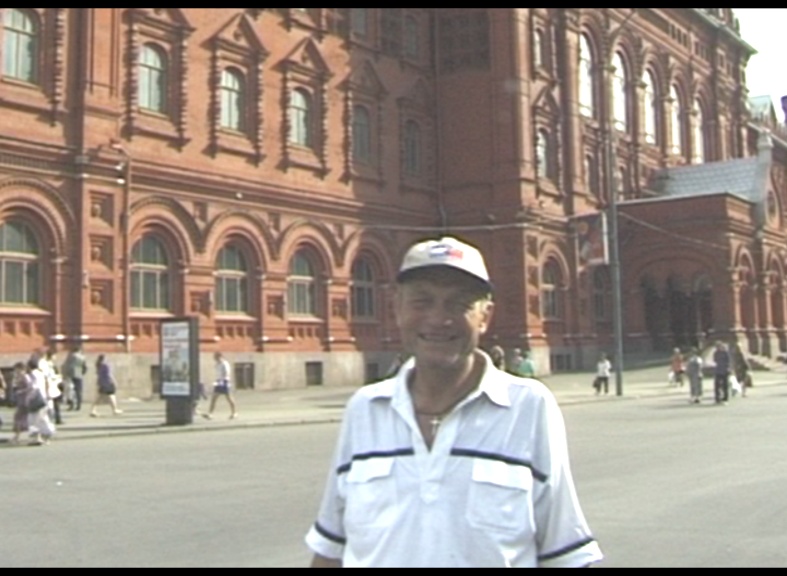
The following day I went to Red Square to shoot some material. There I could happily pose as a tourist and remain relatively anonamous. Or so I thought. It was a very hot sunny day and I began filming around the Moscow Museum which faces onto Red square and Manezh square. If you have been to Moscow, Manezh square has an enormous statue of Marshall Zhukov on a horse. Within minutes I was surrounded by a group of homeless guys who wanted to know all about the project and spoke knowledgably about what were the best angles from which to film buildings. “We know everything about this place, we live here” which of course they did – literally on the streets. They probably wanted to help me for money but I did get the distinct impression that the just wanted to help me because they were genuinely interested in what I was doing. I talked to them for a while and then moved on.

A friendly faced thin middle aged man with a sun-burnt face, then stopped me and asked me to film him. “I’ve just spent twenty years in prison and I have come to Red Square on my first day of freedom. Take a picture of me so that there is something to say that I have existed”. He smiled amiably as I filmed him and then we parted. Five minutes later we bumped into each other and smiled foolishly at each other. Fifteen minutes later, again we bumped into each other, in a different part of the Red Square complex. We both stopped and he said to me “this is the third time we have met, lets exchange coins”. He gave me one ruble and I gave him one ruble from my pocket. “You’re a good guy” he said and we shook hands and I never saw him after that. I don’t know what the significance of exchanging coins is but it seemed very important at the time.

One of the main components of the film is the computer graphics. I had never worked with computer graphics before but I thought for a film about architecture it would be appropriate. I found a guy called Vladimir Sokolov who was recommended to me by a friend and I explained to him what I wanted to do. We worked out some simple story boards and he came up with what I think are some interesting graphics of Tatlin’s Tower and Malevich (see videos below) plus some others.

The film was complicated by the fact that I needed to change studios half way through the editing process and this led to a lot of delays. At that time I was less familiar with studios in Moscow than I am now and more or less had to go on other peoples recommendation’s. The studio I found was alright but I didn’t want to make another film there. Once the film was completed I was contacted by the International Festival of Cinema and Technology to submit the film for participation in their festival which was being held in Toronto that year. They nominated it for best documentary film in the competition but the prize went to another film.

Meyerhold, Theatre and the Russian Avant-garde


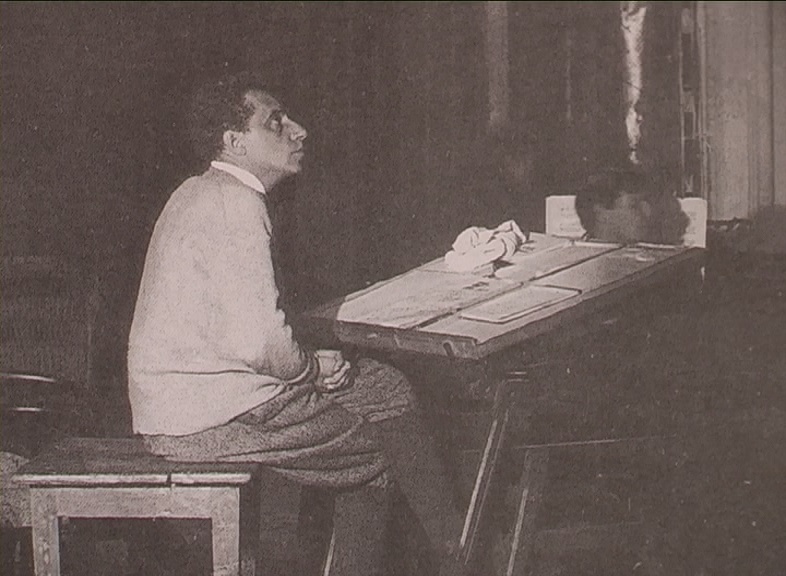
Meyerhold’s task was to combine the three dimensionality of the actors body with the flat two dimensionality of the set design. In order to solve this problem he turned to the developments in the graphic experiments of the Russian avant-garde, people like Popova, Rodchenko etc. He also wanted to move away from a theatre based on words or text for expressing emotions and ideas, to a theatre based on gesture and movement in order to create and widen the possibilities for creating an emotional atmosphere in any given play. For instance Chekov wrote(roughly speaking) for one type of theatre which was actor/text based.

Meyerhold’s productions included influences from Kabuki theatre which is based on mime and dance, the action developing around a series of gestures and poses as much as a result of the text of the play. With both of the above in mind, Meyerhold developed a specific training technique for his actors called biomechanics.

It consisted of a series of exercises and movements in which an actor could collectively, either with a partner or a group of actors, develop non textual or non verbal ways of expressing inner emotions. Through the movement of the actors body, emotions which could not easily be represented by words i.e. crowd scenes or group or mass action revealed themselves on the stage. One of the first plays in which all these elements were synthesised was “The Magnanimous Cuckold”. Popova designed the set as a moving dynamic
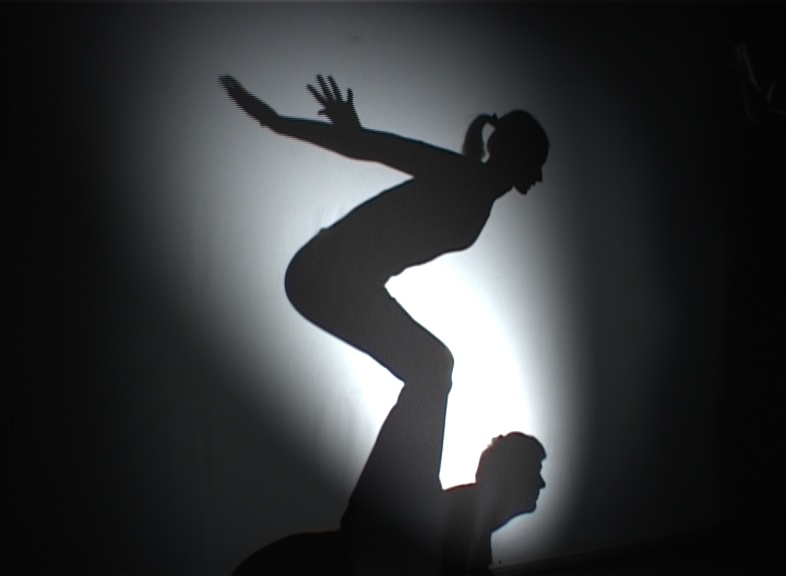
construction almost like a machine in motion. The actors deprived of any make up or costumes struggled to find their feet in this unusual set construction. Here however Meyerhold’s training of biomechanics helped and both actors and set were synthesised into one grand machine moving in unison to the rhythm of Meyerhold’s direction. In order to show how Meyerhold achieved this in a documentary film it was decided to use actors to “recreate” Meyerhold’s techniques. A simple solution was devised of filming the actors performances as shadows. We shot the shadows with an English actor in Moscow who had previously studied at the Moscow Arts theatre. We weren’t quite sure how to go about filming biomechanics so we improvised using the knowledge that we had. The idea of the shadows was to make the presentation more abstract and less concrete so that the emphasis would be on the movement itself rather than the person. This, as far as I understand was echoing some of Meyerhold’s ideas. Once again I asked Slava Sachkov to film the sequences of shadows.

Watch an extract from the film.

Kandinsky and the Russian House

After a long and torturous route this film has finally been completed and released on Amazon as DVD. It is the sixth film in a series about the Russian avant-garde by Copernicus Films and the director Michael Craig. The film took longer than expected for many reasons. Firstly it was necessary to interrupt the editing to finish the film David Burliuk and the Japanese Avant-garde(Also part of the series). secondly when it came to editing the material it was obvious that there would be a need to shoot more material. Also in a strange sense I wasn’t sure how the film should look or be. After making four films about the Russian avant-garde where the style was relatively similar, now I was confronted with a set of material and a subject which required a different approach and a different look but at the same time should integrate with the over all series. For this reason I embarked on finishing David Burliuk and the Japanese Avant-garde and leaving the editing of Kandinsky until later.

As it turned out this was a good idea. When I returned to the Kandinsky film I had fresh ideas which were incorporated into the film. One of the central ideas of the film was a sequence where Kandinsky enters his studio and is struck by the sight of one of his paintings bathed in rays of light. He doesn’t know whether the painting is upside down or what the painting is supposed to depict. It was at this moment that Kandinsky took a leap forward in his search for abstract forms in art. In the editing of this sequence all the threads and various elements of the film came together.

The idea was to show the state of Kandinsky’s consciousness at the particular moment of illumination and to illustrate the accompanying transformation in his consciousness. How Kandinsky’s understanding of his own art transformed itself qualitatively to a new level.

From here the film became much easier to edit and eventually complete.